A website that I also run, but do not publicize very much, is Cazort.net. Cazort.net is a rather old site, pre-dating Facebook. Before I founded RateTea, I used to post some tea reviews on that site. More recently, I started uploading photos there. A few of these photos relate to tea.
This post highlights the top 5 most often-viewed tea-related photos hosted on Cazort.net. These are not necessarily the best or prettiest photos, just the ones that get the most views. If anything, I think these tend not to be the best photos, with perhaps one exception of a photo that I like. For dramatic value, this count will proceed in reverse:
#5. Loose Leaf Tea Sample Bags:
This picture was featured in my blog post Ideal Tea Sample Sizes: How Small, How Large? I personally think the post is much more interesting than the photo, and have no clue why the photo is getting so many views.
#4. Iced Green Tea:
I do think this is a rather pretty photo, probably the only photo on the list that I think has good composition.
#3. Back of Tea Bag Wrapper, Dong Suh Brown Rice Green Tea:
Huh? Yeah, your guess is as good as mine. Not sure why people would want to look at this.
#2. Starway Loose Green Tea Tins:
This is the photo of one of the teas that I featured in my post Cheap Tea: Loose-leaf Teas Offering Outstanding Value.
#1. Dong Suh Tea Bag Wrapper:
Yes, this is the number one most-viewed tea-related photo on my site. The photos of loose-leaf tea all get considerably fewer views.
Some things about the web really don't make much sense to me. What do you think? Do you have a theory as to why the photos of the Dong Suh tea wrappers are getting so many views?
The creator of RateTea writes about tea, business, sustainability, herbs, culture, ecology, and more.
Sunday, July 22, 2012
Friday, July 20, 2012
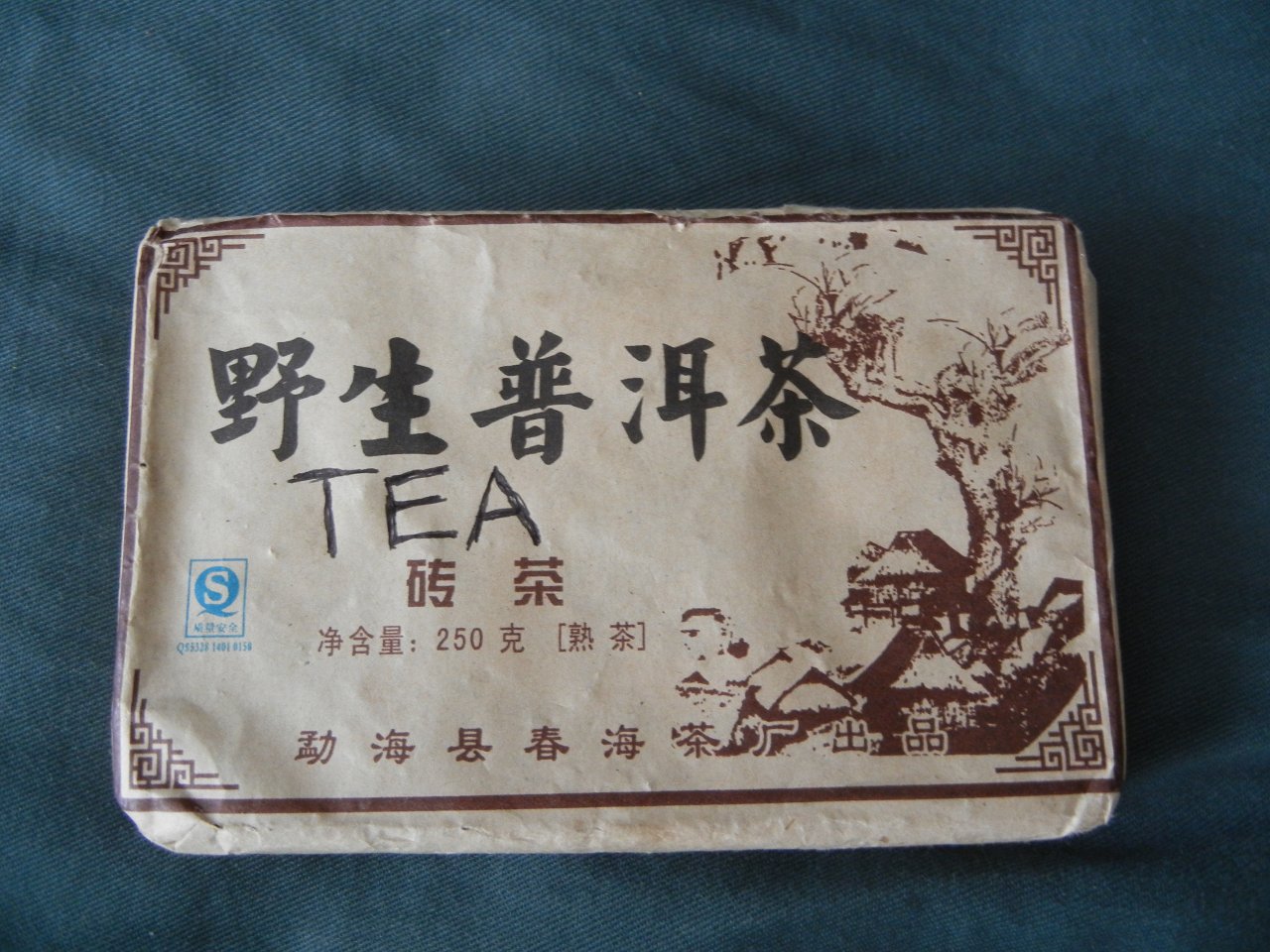
Tea Brick Identification Help: 2008 Sheng Pu-erh?
One of my friends was moving and giving away a bunch of stuff, and gave me a brick of compressed tea. Can anyone help me with identifying it? I see the characters for Sheng Pu-erh tea (生普洱茶), and I see 2008, so I assume this is some 2008 Sheng Pu-erh. If anyone could verify this and provide me with any other interesting or useful info, I'd be very grateful:
The front of the brick:
And the back:
Thanks in advance!
The front of the brick:
And the back:
Thanks in advance!
Tuesday, July 17, 2012
Frontier Co-op - A Leader In Sustainability
Today's post is the second post inspired by my visit to Mariposa Food Co-op in West Philadelphia. In the first post, I wrote about the tea bag selection in the co-op. This post focuses the company that provides the loose-leaf teas and bulk herbs in the same store: Frontier Co-op:
This station doubles as a showcase or display for the herbs and tea, and a self-serve station where people can fill their own bags of herbs. Although the jars are glass jars, which are not ideal because they allow for some break-down of the herbs with light, the display was located in a dark back corner of the store, minimizing the negative effects of the light.
Pictured here are the implements for filling bags, which include scoops and funnels:
Self-serve setups like this are relatively common in natural food stores and co-ops across the country. There is a lot that I like about these sort of self-serve displays. In particular:
What I like about Frontier Co-Op:
First, before I go into depth about what I like about Co-op, I want to point out that the company not only sells loose-leaf tea and bulk herbs in stores, but also through their website:
Some of the things I like most about Frontier Co-op:
I hope that individuals reading this post can have the opportunity to try out Frontier Co-op's herbs, spices, and teas, if they have not already done so. And I hope that people working within the tea industry can look into the various things Frontier is doing to promote sustainability, and can get some good ideas and inspiration. I am hopeful that relatively soon, many of the practices that Frontier is spearheading will become the norm.
What do you think?
Have you tried the teas from Frontier Co-op? How about their herbs and spices? And what do you think about what they are doing to promote sustainability? What do you think of the co-operative model in general? And, for those who work within the tea industry, do you have any plans to implement any of the practices that Frontier has been engaging in in terms of sustainable sourcing, operations, or transparency?
This station doubles as a showcase or display for the herbs and tea, and a self-serve station where people can fill their own bags of herbs. Although the jars are glass jars, which are not ideal because they allow for some break-down of the herbs with light, the display was located in a dark back corner of the store, minimizing the negative effects of the light.
Pictured here are the implements for filling bags, which include scoops and funnels:
Self-serve setups like this are relatively common in natural food stores and co-ops across the country. There is a lot that I like about these sort of self-serve displays. In particular:
- These displays can offer a large selection of herbs and/or tea while taking up minimal space. The space taken up by the display is smaller than that taken up by many supermarkets' packaged tea bag selections.
- The small size of the jars allows for high turnover of the jars' contents, ensuring freshness.
- The self-service station keeps costs down, enabling customers to purchase tea and herbs for a reasonable price, while the store can still make a comfortable profit, without needing to expend employee time for measuring and serving herbs.
- Allowing people to measure out their own herbs and tea enables people to buy the exact quantity they want. This is convenient both for very small sizes (such as for sampling loose-leaf tea, or buying infrequently-used spices) or very large sizes (such as for someone like me, who goes through ground coriander faster than most households use salt or sugar). Most supermarkets offer only fixed sizes of herbs and spices, which are often either too small or too large for people's needs.
What I like about Frontier Co-Op:
First, before I go into depth about what I like about Co-op, I want to point out that the company not only sells loose-leaf tea and bulk herbs in stores, but also through their website:
Some of the things I like most about Frontier Co-op:
- Frontier is organized as a cooperative, wholly owned by its wholesale customers, many of which are in turn cooperatives, like Mariposa co-op, owned by individual people. The co-op model has a number of compelling advantages over other models of ownership; the National Cooperative Business Association (NCBA) has a website that explains this model of business ownership in depth.
- Through its displays in retail stores, Frontier makes a wide selection of herbs available that are not widely available in stores in the U.S., and it also sells loose-leaf orthodox teas of decent quality, which, unfortunately do not tend to be widely available in the U.S. either.
- Frontier Co-op is strongly committed to sustainability, and is a definitive leader in this area, going above and beyond even what many of the more environmentally- and ethically-conscious tea companies are doing. There is so much that this organization is doing to promote sustainability that it is not possible to cover it all here; if you want to read more, I'd invite you to read the sustainability section on Frontier's site. Frontier publishes an annual sustainability report, and has a tangible pathway towards achieving certain goals, with measurable milestones. They also have a great deal more transparency than is the norm in the tea industry. Perhaps some other tea companies can get some good ideas and inspiration in here!
- The quality of the bulk herbs is top-notch, and the teas are not bad. Although Frontier unfortunately does not sell what I would consider to be true artisan tea (single-harvest, single-estate teas), they sell a number of single-region orthodox teas of reasonable quality. And their prices are much lower than the prices on similar teas. The low prices, including on products that are both organic and fair trade certified, sold from a company that has gone above and beyond in the area of sustainability, provide proof that tea companies can deliver sustainably-sourced products at low cost. I have tried a few of Frontier's teas, and while they did not wow me as being otherworldly, they were solidly good. You can find reviews of the few teas I've sampled on RateTea's page on Frontier.
I hope that individuals reading this post can have the opportunity to try out Frontier Co-op's herbs, spices, and teas, if they have not already done so. And I hope that people working within the tea industry can look into the various things Frontier is doing to promote sustainability, and can get some good ideas and inspiration. I am hopeful that relatively soon, many of the practices that Frontier is spearheading will become the norm.
What do you think?
Have you tried the teas from Frontier Co-op? How about their herbs and spices? And what do you think about what they are doing to promote sustainability? What do you think of the co-operative model in general? And, for those who work within the tea industry, do you have any plans to implement any of the practices that Frontier has been engaging in in terms of sustainable sourcing, operations, or transparency?
Monday, July 16, 2012
Tea Trade: A Tea Blogging Platform, Online Tea Marketplace, And Forums
Today's post features a website that I have been a big fan of for some time, Tea Trade. Tea Trade, founded by Jackie and Peter Davenport (who also are behind Leafbox Tea), is an extensive online community centering around tea, which offers a very different array of tools from any other online tea community.
I think Tea Trade is of particular interest to individuals, tea bloggers, and people who run very small tea businesses, although people involved in larger tea businesses could also benefit from being aware of and perhaps participating in the community there as well.
The domain name, Teatra.de, is a classic example of a domain hack, using the top-level domain for Germany, .de, to spell out the name.
What does Tea Trade offer?
Tea Trade has several different features, which are all quite well integrated. The simplest to participate in are the forums, which are moderately active, and I find consistently have intelligent and interesting conversation. The site also offers blog hosting, making it the only blogging platform which is custom-tailored to the needs of tea bloggers. And of course, there is the marketplace, the centerpiece of the site, a place that allows individuals to set up mini tea stores.
What do I like about the site?
I find Tea Trade easy to use and navigate, and clean and professional looking. The site is extensive, owing towards the rich contributions made by the members of the site, and I feel that the community and discussion on the site tends towards the more thoughtful and deeper side among online communities. I suspect that this has something to do with the site's emphasis on blogging, which attracts people who are interested in reading, writing, and critical thinking.
The marketplace also offers a unique option for people interested in selling tea, or tea-related merchandise on a small scale. In my post Create The Conditions For Your Business To Thrive: Che Guevara Offers Business Advice, I talk about how people can create businesses out of thin air, avoiding the need for extensive start-up costs, and growing a business organically. Tea Trade offers unique and powerful tools for people looking to start or grow very small businesses, and it also allows people who may not be interested in starting a full-fledged business to dabble with buying or selling tea on a small scale.
Suggestions for improving Tea Trade:
My one major lament about Tea Trade is the site's slow speed and lack of responsiveness. Pages on the site load considerably slower than I am used to (or comfortable with). My experience timing page loads on the site is that the page load times tend to average around 3-6 seconds for the page to display, with many pages taking 4 or so more seconds to load additional content. As I explained in my post on website speed and responsiveness, I think that this is slow enough that it is a point of concern, the "weakest link" in what Tea Trade has to offer.
I would really like to see Tea Trade address the issue of speed. I think improving the speed (ideally to under 1 second page load times, although averaging around 2 seconds across the board would be a really great improvement over the current speed) would be a major improvement to me, and would lead me to want to participate much more in the community there, possibly even hosting a blog there.
Another issue which is worth mentioning is downtime. Nearly all websites experience some downtime; last month, RateTea was down for a few hours, and a few years ago, it was down for around 12 hours. I even encounter major sites like Blogger and Wordpress giving errors or going down from time to time. But I think Tea Trade has experienced enough downtime that I'd recommend for Jackie and Peter to make it a priority to address this issue as well.
In terms of the site itself, I think it is wonderful, and a great resource.
What do you think?
Are you familiar with Tea Trade? Have you bought or sold products through their marketplace? Have any of you had experience with their tea blog hosting? How do you feel about the site's speed and responsiveness? Have you ever experienced the site being down when trying to access it? Do you have anything else to say about the site?
I think Tea Trade is of particular interest to individuals, tea bloggers, and people who run very small tea businesses, although people involved in larger tea businesses could also benefit from being aware of and perhaps participating in the community there as well.
The domain name, Teatra.de, is a classic example of a domain hack, using the top-level domain for Germany, .de, to spell out the name.
What does Tea Trade offer?
Tea Trade has several different features, which are all quite well integrated. The simplest to participate in are the forums, which are moderately active, and I find consistently have intelligent and interesting conversation. The site also offers blog hosting, making it the only blogging platform which is custom-tailored to the needs of tea bloggers. And of course, there is the marketplace, the centerpiece of the site, a place that allows individuals to set up mini tea stores.
What do I like about the site?
I find Tea Trade easy to use and navigate, and clean and professional looking. The site is extensive, owing towards the rich contributions made by the members of the site, and I feel that the community and discussion on the site tends towards the more thoughtful and deeper side among online communities. I suspect that this has something to do with the site's emphasis on blogging, which attracts people who are interested in reading, writing, and critical thinking.
The marketplace also offers a unique option for people interested in selling tea, or tea-related merchandise on a small scale. In my post Create The Conditions For Your Business To Thrive: Che Guevara Offers Business Advice, I talk about how people can create businesses out of thin air, avoiding the need for extensive start-up costs, and growing a business organically. Tea Trade offers unique and powerful tools for people looking to start or grow very small businesses, and it also allows people who may not be interested in starting a full-fledged business to dabble with buying or selling tea on a small scale.
Suggestions for improving Tea Trade:
My one major lament about Tea Trade is the site's slow speed and lack of responsiveness. Pages on the site load considerably slower than I am used to (or comfortable with). My experience timing page loads on the site is that the page load times tend to average around 3-6 seconds for the page to display, with many pages taking 4 or so more seconds to load additional content. As I explained in my post on website speed and responsiveness, I think that this is slow enough that it is a point of concern, the "weakest link" in what Tea Trade has to offer.
I would really like to see Tea Trade address the issue of speed. I think improving the speed (ideally to under 1 second page load times, although averaging around 2 seconds across the board would be a really great improvement over the current speed) would be a major improvement to me, and would lead me to want to participate much more in the community there, possibly even hosting a blog there.
Another issue which is worth mentioning is downtime. Nearly all websites experience some downtime; last month, RateTea was down for a few hours, and a few years ago, it was down for around 12 hours. I even encounter major sites like Blogger and Wordpress giving errors or going down from time to time. But I think Tea Trade has experienced enough downtime that I'd recommend for Jackie and Peter to make it a priority to address this issue as well.
In terms of the site itself, I think it is wonderful, and a great resource.
What do you think?
Are you familiar with Tea Trade? Have you bought or sold products through their marketplace? Have any of you had experience with their tea blog hosting? How do you feel about the site's speed and responsiveness? Have you ever experienced the site being down when trying to access it? Do you have anything else to say about the site?
Sunday, July 15, 2012
British Oppression: Top 5 Google Searches
When Americans think of tea, many of us think of the British. Nowadays, Americans are more likely to picture the British as pleasant, tea-drinking people, less so in the role of heinous oppressors, imperialists and colonialists. The attitude has shifted quite a ways from the days of the American revolutionary war, in which the United States achieved independence from Great Britain. In contrast to the pre-revolutionary colonies, where the British were seen largely as extracting wealth from the colonies without giving back proportionate value or influence (taxation without representation), the British have more recently been seen as equals and allies.
The history of oppression, imperialism, and colonialism by the British, however, is more recent in some other countries.
Look at the following Google search, which shows Google's top five auto-complete suggestions when typing in British Oppression In:
These suggestions reflect the terms that are most likely typed into the search box.
I find it interesting that the top two results are both major tea-producing countries. This is no coincidence. The British were responsible for introducing large-scale tea production to both India and Kenya. Kenya only achieved independence from Britain in 1963, and India in 1947. It is also no coincidence that the third country, Ireland, is a major tea-drinking country, as the British introduced tea to the Irish.
The legacy of British Colonialism in the tea industry:
The large-scale production of tea in India primarily served British interests, specifically, that of the East India Company. In most cases, freedom from oppression does not come in one step, but rather, is a continuous process. Recall how when slavery was abolished in the U.S., the system of sharecropping and Jim Crow laws still left southern blacks in a position of little power and autonomy relative to whites. Unfortunately, there are economic analogues to this process, not only in the tea industry, but in the economic relationship in general between wealthy Western countries and the countries which had been colonized by them.
It is easy to forget that our society has come a long way, even in relatively recent years. This photo was taken in 1940.
One topic that I have been increasingly thinking and writing about lately is the way, in the tea industry, profits tend to be greatest in the wealthy Western countries, and the share of the final price of a product that reaches the original producers (in countries like Kenya and India) is very small relative to the share that is taken by blenders, packers, and tea marketers in wealthy countries. A report that explores this in more depth is Sustainability Issues in the Tea Sector. This is one reason I both support the goals behind fair trade tea, and think it is important to criticize the fair trade movement to ensure that it is actually achieving what it sets out to do.
Let us be mindful of these issues:
I would like to call people to be aware of these issues, both when buying tea and when selling tea. Thankfully, we are past the days of overt forms of discrimination like Jim Crow laws or colonialism and imperialism, but subtle forms of exploitation persist. The global economic system extracts wealth from poorer regions and keeps the wealth concentrated in already wealthy regions, and, what is perhaps most heinous, it does so in such a way that is largely hidden from the view of not only the typical tea drinker, but many businesses and industry insiders as well.
I think awareness of these issues, and a push for greater transparency in the tea industry, and the economic system in general, is a good first step to take. In the end, I would like us to imagine and bring into being a way of living and doing business which is based on the idea that all people are valuable, and which rewards people equally for equal work, and does not give the people in any one country a disproportionate amount of power or influence in the global economic system.
The history of oppression, imperialism, and colonialism by the British, however, is more recent in some other countries.
Look at the following Google search, which shows Google's top five auto-complete suggestions when typing in British Oppression In:
These suggestions reflect the terms that are most likely typed into the search box.
I find it interesting that the top two results are both major tea-producing countries. This is no coincidence. The British were responsible for introducing large-scale tea production to both India and Kenya. Kenya only achieved independence from Britain in 1963, and India in 1947. It is also no coincidence that the third country, Ireland, is a major tea-drinking country, as the British introduced tea to the Irish.
The legacy of British Colonialism in the tea industry:
The large-scale production of tea in India primarily served British interests, specifically, that of the East India Company. In most cases, freedom from oppression does not come in one step, but rather, is a continuous process. Recall how when slavery was abolished in the U.S., the system of sharecropping and Jim Crow laws still left southern blacks in a position of little power and autonomy relative to whites. Unfortunately, there are economic analogues to this process, not only in the tea industry, but in the economic relationship in general between wealthy Western countries and the countries which had been colonized by them.
It is easy to forget that our society has come a long way, even in relatively recent years. This photo was taken in 1940.
One topic that I have been increasingly thinking and writing about lately is the way, in the tea industry, profits tend to be greatest in the wealthy Western countries, and the share of the final price of a product that reaches the original producers (in countries like Kenya and India) is very small relative to the share that is taken by blenders, packers, and tea marketers in wealthy countries. A report that explores this in more depth is Sustainability Issues in the Tea Sector. This is one reason I both support the goals behind fair trade tea, and think it is important to criticize the fair trade movement to ensure that it is actually achieving what it sets out to do.
Let us be mindful of these issues:
I would like to call people to be aware of these issues, both when buying tea and when selling tea. Thankfully, we are past the days of overt forms of discrimination like Jim Crow laws or colonialism and imperialism, but subtle forms of exploitation persist. The global economic system extracts wealth from poorer regions and keeps the wealth concentrated in already wealthy regions, and, what is perhaps most heinous, it does so in such a way that is largely hidden from the view of not only the typical tea drinker, but many businesses and industry insiders as well.
I think awareness of these issues, and a push for greater transparency in the tea industry, and the economic system in general, is a good first step to take. In the end, I would like us to imagine and bring into being a way of living and doing business which is based on the idea that all people are valuable, and which rewards people equally for equal work, and does not give the people in any one country a disproportionate amount of power or influence in the global economic system.
Friday, July 13, 2012
Green Tea Soap from Trader Joe's
Back in January, I wrote about the tea selection in Trader Joe's. Today, I want to highlight a completely different tea-related product from this company. This is the green tea soap sold in Trader Joe's:
I do not know the exact composition of this soap, but the label claims it is 100% vegetable based (a matter of concern for vegans), and contains shea butter, one of my favorite plant-based oils, and a great moisturizer in its own right.
I'm normally not a huge fan of most packaged bar soaps widely available in supermarkets and drug stores. Many of them smell a bit too much like synthetic chemicals to me, and some of them I find to be harsh on my skin. I rarely find bar soap sold in one of these stores that I like and become a fan of, and this particular one is one exception. This is the only widely available commercial soap (as opposed to artisan soaps created and/or sold by small, local businesses) that I've tried that I would recommend.
What do I like about this soap?
There is a lot about this soap that I like. It smells wonderful, pleasantly aromatic but mild and suggesting sweetness. Its aroma reminds me of some of the higher quality Chinese green teas, ever-so-slightly suggesting floral aromas. It is also quite inexpensive, at $3.29 for a 200mg bar. And, I find it mild on my skin. The soap is soft enough to cut easily when slightly warmer than room temperature, which I like because it is quite a large bar, and I find that cutting it into 3 or 4 smaller bars makes it more convenient and helps one bar to go a little farther.
Interestingly, Trader Joe's also sells a similar soap with a lemon verbena fragrance, and another that is lavender-scented. I find it notable that both of these herbs are frequent ingredients in herbal teas. Interestingly, although I love lemon verbena as an herbal tea, I found their lemon verbena soap a bit harsh; not only did I not like the smell as much, but I found it was not quite as easy on my skin as the green tea soap.
What do you think?
Have you tried this particular soap? Have you tried other soaps or personal care products which are scented with green tea? Have you ever tried the trick of cutting large bars of soap into smaller bars, in order to conserve resources?
I do not know the exact composition of this soap, but the label claims it is 100% vegetable based (a matter of concern for vegans), and contains shea butter, one of my favorite plant-based oils, and a great moisturizer in its own right.
I'm normally not a huge fan of most packaged bar soaps widely available in supermarkets and drug stores. Many of them smell a bit too much like synthetic chemicals to me, and some of them I find to be harsh on my skin. I rarely find bar soap sold in one of these stores that I like and become a fan of, and this particular one is one exception. This is the only widely available commercial soap (as opposed to artisan soaps created and/or sold by small, local businesses) that I've tried that I would recommend.
What do I like about this soap?
There is a lot about this soap that I like. It smells wonderful, pleasantly aromatic but mild and suggesting sweetness. Its aroma reminds me of some of the higher quality Chinese green teas, ever-so-slightly suggesting floral aromas. It is also quite inexpensive, at $3.29 for a 200mg bar. And, I find it mild on my skin. The soap is soft enough to cut easily when slightly warmer than room temperature, which I like because it is quite a large bar, and I find that cutting it into 3 or 4 smaller bars makes it more convenient and helps one bar to go a little farther.
Interestingly, Trader Joe's also sells a similar soap with a lemon verbena fragrance, and another that is lavender-scented. I find it notable that both of these herbs are frequent ingredients in herbal teas. Interestingly, although I love lemon verbena as an herbal tea, I found their lemon verbena soap a bit harsh; not only did I not like the smell as much, but I found it was not quite as easy on my skin as the green tea soap.
What do you think?
Have you tried this particular soap? Have you tried other soaps or personal care products which are scented with green tea? Have you ever tried the trick of cutting large bars of soap into smaller bars, in order to conserve resources?
Thursday, July 12, 2012
Elevation and Climate: Visiting Boreal Forest on a Mountain
One of the things that I have become fascinated in in recent years is weather and climate. This interest is evident in the level of detail about weather which the articles go into on RateTea's pages on the various tea-producing regions. One of the key factors in tea production, which is explained in more depth on the page about climate, geography, and tea production, is elevation. A quick summary of the influence of elevation on climate is that temperatures get colder and precipitation (rain and snow) gets greater as elevation increases. And, as hikers at very high elevations are aware of, the air gets noticeably thinner.
Recently, I had the opportunity to visit Massachussets, where I went to the top of Mount Greylock. Mount Greylock is quite remarkable from an ecological perspective. From a distance, it looks a lot like any of the other surrounding hills, but when you actually climb to the top, you will find an ecosystem quite remarkable for a point so far south:
Pictured above is a meadow on the edge of Boreal forest, or Taiga. Boreal forest is common in Canada, Alaska, and the extreme northernmost parts of the continental U.S. But Massachusetts is far enough south that only a small amount of this ecosystem exists, only at the top of this one mountain. Boreal forest reflects the adaptation of plants and animals to cold temperatures, long winters, and short summers. Some of these adaptations include:
These ecosystems extend even farther south, at even higher elevations. For example, one can find a similar ecosystem in the mountains of New Mexico, although there, the ecosystem only shifts to boreal forest somewhere around 8,000 feet. Mount greylock, pictured above, is under 3,500 feet.
Birds galore:
As a birdwatcher, I was excited to explore this ecosystem to find birds that normally only winter or migrate through the areas where I live. It was July, a time when migration has stopped and usually only breeding resident songbirds are found. And I found quite a few birds that I normally only see during winter or migration, including white-throated sparrow, dark-eyed junco, purple finch, winter wren, Blackpoll warbler, yellow-rumped warbler, Blackburnian warbler, black-throated blue warbler, and black-throated green warbler, among others. The Blackpoll warbler in particular is a species that breeds only in boreal forests.
Above is a photo I took of a singing white-throated sparrow, near the summit of Mount Greylock. In Southeastern Pennsylvania and Delaware, these birds are normally only winter residents.
Try looking for the changes in ecosystem with elevation:
If you have the opportunity to hike or drive to the top of a tall mountain in any region of the world, I would recommend doing so. It will not only help you to learn more about ecology, but it will also help you to see firsthand some of the aspects of how geography influences climate which are most important in the production of tea. If you live in an arid climate, such as the southwestern U.S., you will be even more able to see the phenomenon of how precipitation increases with altitude.
These same factors control where the tea plant is able to be grown. In drier countries like Kenya, tea is only able to be grown at higher elevations, where rainfall is higher. But as the elevation becomes too high, temperatures eventually become too cold. In humid climates, tea can be grown the whole way to sea level, and in colder regions, it can only be grown at low elevations.
What do you think?
Do you think much about elevation, and its influence on climate and ecosystems? Have you ever noticed these sorts of changes, when driving or hiking? Do you live in an area with easy access to mountains or changes in elevation? Do you live in or have you ever visited an area that is dry or cold enough that you can see major changes in an ecosystem as elevation changes?
Recently, I had the opportunity to visit Massachussets, where I went to the top of Mount Greylock. Mount Greylock is quite remarkable from an ecological perspective. From a distance, it looks a lot like any of the other surrounding hills, but when you actually climb to the top, you will find an ecosystem quite remarkable for a point so far south:
Pictured above is a meadow on the edge of Boreal forest, or Taiga. Boreal forest is common in Canada, Alaska, and the extreme northernmost parts of the continental U.S. But Massachusetts is far enough south that only a small amount of this ecosystem exists, only at the top of this one mountain. Boreal forest reflects the adaptation of plants and animals to cold temperatures, long winters, and short summers. Some of these adaptations include:
- Trees have a conical shape. This helps to shunt off the heavy loads of snow falling in the winter, so that the trees do not lose limbs. Evergreen trees (like pine and cedar) growing in southerly climates tend to have a rounded shape, because there is little to no snow in the winter; round shapes capture more sunlight, but increase the risk of limbs breaking during a snowfall.
- Most plants are evergreen. This is because the temperatures are so cold that there is not enough time for the nutrients in the soil to break down and become available to plants; because nutrients are scarce, plants cannot afford to drop their leaves each year. Incidentally, the tea plant's evergreen status is also an adaptation to low nutrient levels, which is why it is able to survive on rocky outcroppings like those in the Wuyi mountains.
- Deciduous trees have light-colored bark. Think aspen and paper birch (white birch). The temperatures are so cold in winter, and the sun is at a low angle, so that if a deciduous tree (which drops its leaves in winter) were to have dark-colored bark, the sun shining on it horizontally would heat the bark so much that it would crack. This is the same phenomenon of thermal shock that I explained in my earlier post about why teaware can shatter when pouring boiling water in it. The light color of the bark reflects the sun and prevents the heating and cracking of the bark.
These ecosystems extend even farther south, at even higher elevations. For example, one can find a similar ecosystem in the mountains of New Mexico, although there, the ecosystem only shifts to boreal forest somewhere around 8,000 feet. Mount greylock, pictured above, is under 3,500 feet.
Birds galore:
As a birdwatcher, I was excited to explore this ecosystem to find birds that normally only winter or migrate through the areas where I live. It was July, a time when migration has stopped and usually only breeding resident songbirds are found. And I found quite a few birds that I normally only see during winter or migration, including white-throated sparrow, dark-eyed junco, purple finch, winter wren, Blackpoll warbler, yellow-rumped warbler, Blackburnian warbler, black-throated blue warbler, and black-throated green warbler, among others. The Blackpoll warbler in particular is a species that breeds only in boreal forests.
Above is a photo I took of a singing white-throated sparrow, near the summit of Mount Greylock. In Southeastern Pennsylvania and Delaware, these birds are normally only winter residents.
Try looking for the changes in ecosystem with elevation:
If you have the opportunity to hike or drive to the top of a tall mountain in any region of the world, I would recommend doing so. It will not only help you to learn more about ecology, but it will also help you to see firsthand some of the aspects of how geography influences climate which are most important in the production of tea. If you live in an arid climate, such as the southwestern U.S., you will be even more able to see the phenomenon of how precipitation increases with altitude.
These same factors control where the tea plant is able to be grown. In drier countries like Kenya, tea is only able to be grown at higher elevations, where rainfall is higher. But as the elevation becomes too high, temperatures eventually become too cold. In humid climates, tea can be grown the whole way to sea level, and in colder regions, it can only be grown at low elevations.
What do you think?
Do you think much about elevation, and its influence on climate and ecosystems? Have you ever noticed these sorts of changes, when driving or hiking? Do you live in an area with easy access to mountains or changes in elevation? Do you live in or have you ever visited an area that is dry or cold enough that you can see major changes in an ecosystem as elevation changes?
Subscribe to:
Posts (Atom)