This post was inspired by Tea V's blog post titled Cup of Tea & Courtesy.
I think a lot about the factors that contribute to either courteous or disrespectful behavior, both on an individual and group level. We all know certain circumstances in which it's easy to be respectful (with people we like, when everything is going well), and others in which it is more of a challenge (when we are under stress, or when we interact with others who are being disrespectful towards us).
I've often thought about what I can do to help both myself and others be respectful. In spite of the fact that I want to be respectful at all times, I find I regularly fall short of this ideal. I'm always searching for ways I can help myself deal gracefully with the most difficult situations.
Human contact is very important--eye contact and touch can help a great deal. There's a fascinating NY Times article about the importance of touch in both communication and relaxation. I think that the absence of these nonverbal connections partly explains why people are likely to be disrespectful when interacting on internet forums and over email.
How can tea help?
The act of holding a warm cup of tea is comforting and puts you at ease. There's even some scientific evidence that holding a warm cup can make you more likely to act generously. The mindful act of slowly drinking hot tea I also find to calm the mind and body...putting one in a mindset in which it's easier to be courteous of others. Maybe tea can make it a little bit easier for us to move closer to that ideal of being respectful of all people at all times.
Sunday, April 25, 2010


Wednesday, April 21, 2010
Tea Blogging vs. Tea Community Websites
What's the difference between reviewing teas on a tea blog, and on an interactive tea community website? Here I am thinking both of interactive tea-rating/reviewing or microblogging sites like RateTea or Steepster, and discussion forums like the Leafbox Tea Forums, TeaChat, or the TeaViews Forums. I've found that all of these sites have something in common:
Tea blogs, on the other hand, are very diverse. Each blogger develops their own style, even when interacting regularly with other bloggers. Some blogs focus mostly on reviews, others on news, gadgets, travel, and many combine reviews with other topics. The reviews range from paragraph-long posts to detailed, multiple-page reviews. Some are without pictures, and others include high-resolution photos of the loose tea, brewed tea, and sometimes the used tea leaves. Bloggers writing about compressed teas like Pu-erh often discuss and sometimes even photograph the process of breaking the tea apart. Some people even make video blogs; some bloggers use video exclusively while others combine video with text.
In summary, tea blogs have in common, relative to tea community websites:
This isn't "better" or "worse" than what happens on tea community sites...it's just different. Personally, I see value both in interactive websites and tea blogs. Interactive websites encourage more casual activity, make it easier to get involved, and get people interacting with each other immediately. Tea blogs tend to delve into more depth, develop more slowly, have more diversity in their content and style, and are ultimately more empowering to the person writing. I think both have a purpose.
How can tea blogs and community websites work together?
As someone who designed and runs a tea community site, RateTea, I'm a little bit worried that tea community websites might draw people in and discourage them from blogging. I've seen a pattern elsewhere on the web where people discover a new, easy-to-use site and stop blogging or stop blogging as often. I want to encourage the opposite: I want to use RateTea as a vehicle to encourage and promote tea blogging. I think something wonderful and beautiful happens when people write about a topic in depth and start participating in a community of active writers, and I want to nurture and promote these communities. This is behind the latest new feature of RateTea, which I highlight in the recent newsletter: Profile Pics & Linking to Tea Blogs.
I am hoping that bloggers can post brief reviews on RateTea, linking them to more detailed reviews on a tea blog. I am also hoping RateTea can appeal to and reach a broader, more casual audience that may not know about these tea blogs, and may not know as much about tea, but through exploring the site can discover the rich community of tea bloggers out there, and through doing so can take their understanding and appreciation of tea to a new level. Possibly, some will be encouraged to create tea blogs of their own!
- Reviews and discussion on community websites tend to be relatively brief.
- Because community websites display different users' reviews or dialogue on the same page, the reviews tend to take on a more similar style and structure, as each user is influenced by reading the other reviews or comments.
Tea blogs, on the other hand, are very diverse. Each blogger develops their own style, even when interacting regularly with other bloggers. Some blogs focus mostly on reviews, others on news, gadgets, travel, and many combine reviews with other topics. The reviews range from paragraph-long posts to detailed, multiple-page reviews. Some are without pictures, and others include high-resolution photos of the loose tea, brewed tea, and sometimes the used tea leaves. Bloggers writing about compressed teas like Pu-erh often discuss and sometimes even photograph the process of breaking the tea apart. Some people even make video blogs; some bloggers use video exclusively while others combine video with text.
In summary, tea blogs have in common, relative to tea community websites:
- Reviews and discussion on tea blogs tend to be longer, more detailed, and more involved/deeper.
- Tea blogs tend to be more diverse in style and content than tea community sites.
- Tea blogs cover a broader range of tea-related topics and experiences, even when reviewing a specific tea.
This isn't "better" or "worse" than what happens on tea community sites...it's just different. Personally, I see value both in interactive websites and tea blogs. Interactive websites encourage more casual activity, make it easier to get involved, and get people interacting with each other immediately. Tea blogs tend to delve into more depth, develop more slowly, have more diversity in their content and style, and are ultimately more empowering to the person writing. I think both have a purpose.
How can tea blogs and community websites work together?
As someone who designed and runs a tea community site, RateTea, I'm a little bit worried that tea community websites might draw people in and discourage them from blogging. I've seen a pattern elsewhere on the web where people discover a new, easy-to-use site and stop blogging or stop blogging as often. I want to encourage the opposite: I want to use RateTea as a vehicle to encourage and promote tea blogging. I think something wonderful and beautiful happens when people write about a topic in depth and start participating in a community of active writers, and I want to nurture and promote these communities. This is behind the latest new feature of RateTea, which I highlight in the recent newsletter: Profile Pics & Linking to Tea Blogs.
I am hoping that bloggers can post brief reviews on RateTea, linking them to more detailed reviews on a tea blog. I am also hoping RateTea can appeal to and reach a broader, more casual audience that may not know about these tea blogs, and may not know as much about tea, but through exploring the site can discover the rich community of tea bloggers out there, and through doing so can take their understanding and appreciation of tea to a new level. Possibly, some will be encouraged to create tea blogs of their own!
Monday, April 12, 2010
Good Catalog Descriptions of Tea
There is a degree to which almost every company (not just in tea) "talks up" their product in marketing. However, some companies are more egregiously over-the-top in doing it than others. As someone who greatly appreciates honesty in all aspects of life, I pay a lot of attention to how tea companies write about their products, and I think critically about whether or not they are being honest in their descriptions. And I reward companies that consistently provide honest, useful descriptions with my loyalty as a customer.
What makes a good description?
I think a good commercial description of a tea:
Let's look at Upton Tea Import's TM20: Himalayan BOP. This is an inexpensive (125g for $4.20) broken-leaf black tea that is a blend from various regions in and around Darjeeling. Personally, I love it and think it offers great value. (my review) Upton's description:
This is what I'd say is a good commercial description. It's brief and provides useful information: "Darjeeling-like" is very informative, "brief infusion" communicates that this tea infuses quickly (and implies that you don't want to let it steep too long--which is true--this tea becomes unpleasantly bitter and astringent if steeped too long), the cup is indeed a light amber color, and the tea has a high-grown character, makes good iced tea, and has an attractive price.
What Not to Say - Weasel Words in Commercial Descriptions:
Since I just praised Upton, and since they are my favorite company, I think it's fair for me to give them a bit of a hard time too. Let's look at their TA98: Mothola Estate White Tea.
This description has a lot of useful information--it's made entirely from tips, made of the Assamica cultivar, its flavor is smooth and sweet, and it has a malty nuance (interesting and worth mention because one wouldn't expect this from a white tea). But the "Highly recommended" reads like a weasel word -- Recommended by whom, by Upton? Does this mean their other teas are only weakly recommended? This seems silly. And "is on par with the most exquisite white teas"...what exactly is the "most exquisite"? Taste is so subjective and I think it's best to refrain from making sweeping statements. For example, I notice that many tea drinkers strongly prefer silver needle white tea over shou mei, but there are those (such as myself) who would take shou mei any day.
I'm singling Upton out a bit unfairly here...mainly because I want to keep this post as positive as possible. =) I think Upton's descriptions are consistently honest and informative and that's one reason I like them as a company. However, if you scan commercial descriptions of various companies, you find language like this all the time, and sometimes significantly worse. "You'll love this tea..." and variants of that phrase are quite common. How does the writer know what I'll love? A major weasel word is the word "renowned" or "famous" to refer to an estate or tea garden, or sometimes a particular tea. And another weasel word: "rare". If a tea is limited production, a one-time single batch, why not state how much of it was produced? If it's not, there's no basis to claim it's "rare". If it has won an award, why not state that? But if it hasn't, but your own personal team of tasters selected it for its qualities, isn't that more informative than just saying it's good? Thinking about these things enable us to identify honesty (and dishonesty) in commercial descriptions.
The description of one of Upton's teas (TD70, since discontinued) contains the phrase:
I think this is better...it's not claiming that the tea is the best out there, it's just saying--hey, we tried a bunch of teas and we really liked this one. There's nothing wrong with subjectivity in taste...I think most people want to buy from tea companies that employ people who put effort and their own subjective judgment into tasting teas.
I'd be curious to hear other people's opinions / experiences with commercial descriptions. Does anyone have any more likes / dislikes to contribute?
What makes a good description?
I think a good commercial description of a tea:
- is brief.
- contains useful information about what flavors, aromas, and other qualities to expect in the tea.
- may mention or reference brewing instructions.
- may contain information about the tea's origins and how it is produced (e.g. is a green tea pan-fired or steamed? is it grown from a particular cultivar? etc.)
- may compare the tea to familiar varieties of tea in positive or negative ways ("similar to a Keemun" or "without the grassy and vegetal tones characterizing some sencha").
- avoids weasel words (I am an active editor on wikipedia and I love the concept of Weasel words--if you're not familiar with the concept, I would recommend reading that page because it provides a great way to quickly distinguish b.s. from well-researched material).
Let's look at Upton Tea Import's TM20: Himalayan BOP. This is an inexpensive (125g for $4.20) broken-leaf black tea that is a blend from various regions in and around Darjeeling. Personally, I love it and think it offers great value. (my review) Upton's description:
For those seeking a Darjeeling-like tea at a very attractive price. The liquor is light amber. A brief infusion yields a flavorful cup with a distinctively high-grown character. Excellent for iced tea.
This is what I'd say is a good commercial description. It's brief and provides useful information: "Darjeeling-like" is very informative, "brief infusion" communicates that this tea infuses quickly (and implies that you don't want to let it steep too long--which is true--this tea becomes unpleasantly bitter and astringent if steeped too long), the cup is indeed a light amber color, and the tea has a high-grown character, makes good iced tea, and has an attractive price.
What Not to Say - Weasel Words in Commercial Descriptions:
Since I just praised Upton, and since they are my favorite company, I think it's fair for me to give them a bit of a hard time too. Let's look at their TA98: Mothola Estate White Tea.
Crafted entirely from the tips of the Assamica tea plant, this rare selection is on par with the most exquisite white teas. The flavor is smooth and sweet as one expects from a quality white tea, but a surprising malty nuance adds a delightful complexity. Highly recommended.
This description has a lot of useful information--it's made entirely from tips, made of the Assamica cultivar, its flavor is smooth and sweet, and it has a malty nuance (interesting and worth mention because one wouldn't expect this from a white tea). But the "Highly recommended" reads like a weasel word -- Recommended by whom, by Upton? Does this mean their other teas are only weakly recommended? This seems silly. And "is on par with the most exquisite white teas"...what exactly is the "most exquisite"? Taste is so subjective and I think it's best to refrain from making sweeping statements. For example, I notice that many tea drinkers strongly prefer silver needle white tea over shou mei, but there are those (such as myself) who would take shou mei any day.
I'm singling Upton out a bit unfairly here...mainly because I want to keep this post as positive as possible. =) I think Upton's descriptions are consistently honest and informative and that's one reason I like them as a company. However, if you scan commercial descriptions of various companies, you find language like this all the time, and sometimes significantly worse. "You'll love this tea..." and variants of that phrase are quite common. How does the writer know what I'll love? A major weasel word is the word "renowned" or "famous" to refer to an estate or tea garden, or sometimes a particular tea. And another weasel word: "rare". If a tea is limited production, a one-time single batch, why not state how much of it was produced? If it's not, there's no basis to claim it's "rare". If it has won an award, why not state that? But if it hasn't, but your own personal team of tasters selected it for its qualities, isn't that more informative than just saying it's good? Thinking about these things enable us to identify honesty (and dishonesty) in commercial descriptions.
The description of one of Upton's teas (TD70, since discontinued) contains the phrase:
...one of the best we have cupped this season...
I think this is better...it's not claiming that the tea is the best out there, it's just saying--hey, we tried a bunch of teas and we really liked this one. There's nothing wrong with subjectivity in taste...I think most people want to buy from tea companies that employ people who put effort and their own subjective judgment into tasting teas.
I'd be curious to hear other people's opinions / experiences with commercial descriptions. Does anyone have any more likes / dislikes to contribute?
Friday, April 2, 2010
Three Unusually Good Inexpensive Teas
In the world of high-quality loose tea, it's often true that you get what you pay for. I've often tasted several grades of the same tea and noticed the increasing complexity corresponding to appropriate increasing price--and it's also important to mention that many of the higher-priced teas lack unpleasant characteristics present in their cheaper counterparts.
But it's also true that there are deals out there. Today I'll share three teas that I personally think are unusually high in quality relative to how inexpensive they are. If you're price-sensitive but still want to try something really good, I'd recommend checking out these offerings.
Upton Tea Import's Se Chung Oolong:
 Se Chung was a bit of an enigma to me; it has been tricky to figure out exactly what it was, and I'd still like to find more reliable sources to back up the page I wrote on Se Chung. (Thanks to the many forum participants who informed this article.) From trying a few se chungs, they can be quite diverse. This particular one is a greener oolong, strong and bold in flavor, complex in aroma, and the leaves can be infused many times. I like this far better than any Tie Guan Yin I've tried in a similar (or considerably higher) price range. Detailed review of Upton's Se Chung. At $4.90 for 100g, this tea is an absolute steal.
Hampstead Tea's Darjeeling (from Makaibari Estate):
This is a lighter, gentle Darjeeling, not a first-flush but with a noticeable first-flush character. It's also fair trade and organic certified--and beyond this, it's a biodynamic plantation (which includes in this case the fact that most of the area of the estate is left as wild forest). But even setting these things aside, I think this tea competes with considerably more expensive teas on its flavor and aroma alone. The aroma is very pleasing and has a lot of things going on. Detailed review. I'm not sure if it has an official price but I've seen it for sale in stores and online retailers for as low as $4 for a 125g canister; typical price is closer to $8 but it's still a great deal.
Ten Ren's Pouchong 3rd Grade:
This is by no means a top-notch Pouchong / Bao Zhong. It has a number of subtle qualities that connoisseurs and everyday tea-drinkers alike will most likely object to--a fishy quality, a certain harshness. But it's hard to find inexpensive pouchongs, and this one is the only one I've found in this price range that's worth trying. It has a honey-like sweetness, a floral quality, and yet has a pleasant bite to it, and I find it quite enjoyable to drink. Detailed review. 4oz. for $7.00; I actually bought it in Chicago for less than this in the Ten Ren store but the prices may have gone up since then.
Always looking for more ideas!
I'm always looking for more teas that people think are an exceptionally good deal, so if you have anything you know of, please let me know!
But it's also true that there are deals out there. Today I'll share three teas that I personally think are unusually high in quality relative to how inexpensive they are. If you're price-sensitive but still want to try something really good, I'd recommend checking out these offerings.
Upton Tea Import's Se Chung Oolong:
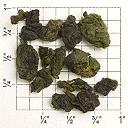 Se Chung was a bit of an enigma to me; it has been tricky to figure out exactly what it was, and I'd still like to find more reliable sources to back up the page I wrote on Se Chung. (Thanks to the many forum participants who informed this article.) From trying a few se chungs, they can be quite diverse. This particular one is a greener oolong, strong and bold in flavor, complex in aroma, and the leaves can be infused many times. I like this far better than any Tie Guan Yin I've tried in a similar (or considerably higher) price range. Detailed review of Upton's Se Chung. At $4.90 for 100g, this tea is an absolute steal.
Hampstead Tea's Darjeeling (from Makaibari Estate):
This is a lighter, gentle Darjeeling, not a first-flush but with a noticeable first-flush character. It's also fair trade and organic certified--and beyond this, it's a biodynamic plantation (which includes in this case the fact that most of the area of the estate is left as wild forest). But even setting these things aside, I think this tea competes with considerably more expensive teas on its flavor and aroma alone. The aroma is very pleasing and has a lot of things going on. Detailed review. I'm not sure if it has an official price but I've seen it for sale in stores and online retailers for as low as $4 for a 125g canister; typical price is closer to $8 but it's still a great deal.
Ten Ren's Pouchong 3rd Grade:
This is by no means a top-notch Pouchong / Bao Zhong. It has a number of subtle qualities that connoisseurs and everyday tea-drinkers alike will most likely object to--a fishy quality, a certain harshness. But it's hard to find inexpensive pouchongs, and this one is the only one I've found in this price range that's worth trying. It has a honey-like sweetness, a floral quality, and yet has a pleasant bite to it, and I find it quite enjoyable to drink. Detailed review. 4oz. for $7.00; I actually bought it in Chicago for less than this in the Ten Ren store but the prices may have gone up since then.
Always looking for more ideas!
I'm always looking for more teas that people think are an exceptionally good deal, so if you have anything you know of, please let me know!
Tuesday, March 30, 2010
Is "herbal tea" tea?
Among tea connoisseurs, enthusiasts, and tea companies, I frequently encounter blog posts, webpages, and other writings (most of which come across as outright rants) in which people complain about the use of the term "tea" to refer to herbal teas that do not contain the Camellia sinensis plant. The claim is always the same: the only "correct" use of the word tea is to refer to Camellia sinensis; other uses of the word are inaccurate, wrong, misleading, ill-informed.
These people invariably advocate for the usage of terms like "herbal infusion" or "tisane" that do not contain the word "tea". Some people (whom I shall not name) have even made statements that they would never buy from a company that sold "herbal tea" because, according to them, the product would obviously be inferior because the company selling it obviously didn't know anything about tea.
What does the word "tea" mean?
What does the word tea mean? We all know that it is used to refer to the actual tea plant and the beverages made from it. But does it have other valid, accepted definitions? Let's look at the dictionary definitions of tea. The Random House dictionary gives a number of definitions, among them:
5. any of various infusions prepared from the leaves, flowers, etc., of other plants, and used as beverages or medicines.
Is this particular dictionary peculiar? Let's look at the American Heritage Dictionary's definition:
3. Any of various beverages, made as by steeping the leaves of certain plants or by extracting an infusion especially from beef.
Ahh, one could object, but these are American dictionaries. Let's go for the Oxford English Dictionary's definition of tea. The British know tea after all, right?
3. a drink made from the leaves, fruits, or flowers of other plants.
But do people actually use these terms?
Let's use google to settle the score. How many hits does the term "herbal tea" get? How about other terms?
So...give it up folks. Herbal tea is a perfectly valid use of the word "tea"; it doesn't refer to the Camellia sinensis plant, but the use of the word "tea" makes sense because the two beverages are infused in the same way and share more similarities with each other than with other beverages. People aren't being ignorant just because they use a term like "herbal tea", "chamomile tea" or "mint tea". But people are being pedantic when they go around insisting people use words like infusion and dismissing people or companies just because they're using a perfectly valid term that is well-accepted by the mainstream.
These people invariably advocate for the usage of terms like "herbal infusion" or "tisane" that do not contain the word "tea". Some people (whom I shall not name) have even made statements that they would never buy from a company that sold "herbal tea" because, according to them, the product would obviously be inferior because the company selling it obviously didn't know anything about tea.
What does the word "tea" mean?
What does the word tea mean? We all know that it is used to refer to the actual tea plant and the beverages made from it. But does it have other valid, accepted definitions? Let's look at the dictionary definitions of tea. The Random House dictionary gives a number of definitions, among them:
5. any of various infusions prepared from the leaves, flowers, etc., of other plants, and used as beverages or medicines.
Is this particular dictionary peculiar? Let's look at the American Heritage Dictionary's definition:
3. Any of various beverages, made as by steeping the leaves of certain plants or by extracting an infusion especially from beef.
Ahh, one could object, but these are American dictionaries. Let's go for the Oxford English Dictionary's definition of tea. The British know tea after all, right?
3. a drink made from the leaves, fruits, or flowers of other plants.
But do people actually use these terms?
Let's use google to settle the score. How many hits does the term "herbal tea" get? How about other terms?
- herbal tea - 3 million
- tisane - 1 million
- herbal infusion - 179,000
So...give it up folks. Herbal tea is a perfectly valid use of the word "tea"; it doesn't refer to the Camellia sinensis plant, but the use of the word "tea" makes sense because the two beverages are infused in the same way and share more similarities with each other than with other beverages. People aren't being ignorant just because they use a term like "herbal tea", "chamomile tea" or "mint tea". But people are being pedantic when they go around insisting people use words like infusion and dismissing people or companies just because they're using a perfectly valid term that is well-accepted by the mainstream.
Monday, March 29, 2010
Four Herbal Teas You May Not Know About
From my garden in Delaware:
It's late march here in Delaware, and we've had lots of wet, warm weather, interspersed by a frost here and there, but that's not enough to discourage the numerous plants in the mint family adapted to humid temperate climates: these plants have been growing vigorously and will soon have enough leaves to make the first batches of herbal tea of the year. I took a few pictures of the new foliage of perennial herbs that I use for herbal tea.
These are only a few of the many herbs in my garden; I thought to highlight these as they're all a little outside of the mainstream things that you typically find for sale as herbal teas. They're all easy to grow and, in my opinion they're all outstanding--people who haven't tried them are missing out!

Lemon balm (Melissa officinalis) is a plant in the mint family that makes a delicious tea. Its aroma is lemony, similar in many respects to lemongrass but gentler. Not only is this a very pleasing herb, but there is also some evidence it has antibacterial, antiviral, and stress-reducing properties.
 Monarda sp. (wild bergamot, Oswego tea, bee-balm) are aptly named. These plants, native to North America, have colorful flowers that attract bees, and the leaves make an outstanding herbal tea that closely resembles the aroma of the unrelated bergamot orange used in Earl Grey tea. They are useful for infusion on their own, mixing with other herbs, or blending with black tea to make something that resembles Earl Grey tea.
 Orange mint (Mentha citrata or Mentha x piperita L. var. citrata) is a cultivar of peppermint, which is a hybrid mint of spearmint and water mint. It has been bred for a citrus-like aroma, and while it looks a lot like peppermint, the similarity ends there.
I find this mint to make an outstanding herbal tea with a rich aroma; it also makes a very welcome addition to mint tea blends, adding considerable depth and complexity. Its strength makes it hold its own in blends with black teas. It is also more basil-like in aroma and I find makes a useful substitute for basil in the early spring and late fall when temperatures are too cold to have basil outdoors.
I also tried planting something new:
 Pineapple sage (Salvia elegans) is a plant native to high-elevation scrub forests in the mountains of Mexico and Guatemala. Its bright red, tubular flowers attract hummingbirds. The leaves make a sweet, aromatic tea strongly suggesting of pineapple; there is evidence from studies on mice that the herb may have antidepressant and anti-anxiety properties.
This herb is an annual in cold temperate climates, but it can take some cold. I'm hoping it's not too early to plant here in Delaware; I bought it from a local nursery that has been growing it outdoors in an unheated greenhouse, and those high altitudes in Mexico can get pretty cold. I planted it in a warm, dry part of the garden, close to the building in order to simulate its natural habitat more closely...we'll see how it does!
It's late march here in Delaware, and we've had lots of wet, warm weather, interspersed by a frost here and there, but that's not enough to discourage the numerous plants in the mint family adapted to humid temperate climates: these plants have been growing vigorously and will soon have enough leaves to make the first batches of herbal tea of the year. I took a few pictures of the new foliage of perennial herbs that I use for herbal tea.
These are only a few of the many herbs in my garden; I thought to highlight these as they're all a little outside of the mainstream things that you typically find for sale as herbal teas. They're all easy to grow and, in my opinion they're all outstanding--people who haven't tried them are missing out!

Lemon balm (Melissa officinalis) is a plant in the mint family that makes a delicious tea. Its aroma is lemony, similar in many respects to lemongrass but gentler. Not only is this a very pleasing herb, but there is also some evidence it has antibacterial, antiviral, and stress-reducing properties.
 Monarda sp. (wild bergamot, Oswego tea, bee-balm) are aptly named. These plants, native to North America, have colorful flowers that attract bees, and the leaves make an outstanding herbal tea that closely resembles the aroma of the unrelated bergamot orange used in Earl Grey tea. They are useful for infusion on their own, mixing with other herbs, or blending with black tea to make something that resembles Earl Grey tea.
 Orange mint (Mentha citrata or Mentha x piperita L. var. citrata) is a cultivar of peppermint, which is a hybrid mint of spearmint and water mint. It has been bred for a citrus-like aroma, and while it looks a lot like peppermint, the similarity ends there.
I find this mint to make an outstanding herbal tea with a rich aroma; it also makes a very welcome addition to mint tea blends, adding considerable depth and complexity. Its strength makes it hold its own in blends with black teas. It is also more basil-like in aroma and I find makes a useful substitute for basil in the early spring and late fall when temperatures are too cold to have basil outdoors.
I also tried planting something new:
 Pineapple sage (Salvia elegans) is a plant native to high-elevation scrub forests in the mountains of Mexico and Guatemala. Its bright red, tubular flowers attract hummingbirds. The leaves make a sweet, aromatic tea strongly suggesting of pineapple; there is evidence from studies on mice that the herb may have antidepressant and anti-anxiety properties.
This herb is an annual in cold temperate climates, but it can take some cold. I'm hoping it's not too early to plant here in Delaware; I bought it from a local nursery that has been growing it outdoors in an unheated greenhouse, and those high altitudes in Mexico can get pretty cold. I planted it in a warm, dry part of the garden, close to the building in order to simulate its natural habitat more closely...we'll see how it does!
Thursday, March 18, 2010
Private Label Teas
The idea of a private label tea sounds reasonable: a company sells tea that can be packaged and given a brand name of its own. It makes a lot of sense for restaurants, hotels, spa's, and any other businesses that wish to sell their own brand of tea, but either aren't knowledgeable enough in the tea market to source directly, or simply don't want to take on this added responsibility.
However, there is an ugly side to the phenomenon of private label teas.
The Tea and Coffee Trade Journal has an excellent article on this subject, by Randy Altman, titled "The Secret and Lucrative Private Label Tea Market" (from 2007, the article is now not viewable on the original journal's site but can be read on The Free Library). The private label business is a secretive one, especially when the source company also sells directly to individuals: any company selling such private label tea needs to hide the source of their tea, for if the customer found out, they could purchase the tea directly from the source. The customer might also feel cheated, especially if the markup were too high, and this could harm the company's loyalty--including in areas beyond their sales of tea (which might not be a main source of revenue).
Many providers of private label tea solve this problem by only selling wholesale. However, the markup is still high--it's just now even more effectively hidden from the customer. Nothing has changed; it's only harder for the prices and markup to be spotted.
Economic justice?
In addition to the question of a fair price for tea drinkers, there is a very ugly economic justice aspect to private label tea: the extra profit generated by the markup in this extra step is pocketed solely by the companies buying and selling the private label tea--it typically does not "trickle down" to the original producers. SOMO's 2008 report, Sustainability Issues in the Tea Sector, identifies as one of the major sustainability issues facing the tea industry the fact that producers earn such a tiny share of the profits from tea, whereas the company engaging in the last step, selling to the customer (in this case the company selling their own private label) earns the lion's share of the profits. In a sense, it's the opposite of the goal/principles of fair trade, which boils down to the idea of cutting out middlemen and ensuring that the price paid by the end customer reflects a fair living wage paid to the original producer.
By buying private label tea, you're effectively making the rich richer and keeping the poor poor.
What can be done about this?
Fortunately, there are easy solutions to these problems! Buying from companies that source directly (like Yunnan Sourcing or ) not only gets you a better price--you're getting the full value of what you pay for instead of just lining someone's pocket's--but, especially when you buy fair trade tea and/or tea sourced directly from small farmers (especially from farmer-owned companies like Obubu Tea), you're empowering the producers. Many companies, like Rishi Tea, take a multifaceted approach, working with fair trade and organic certification, and engaging in other sustainability-promoting initiatives. Equal Exchange also goes above and beyond the standard fair trade certification to work for economic justice. And Shanti Tea not only works with fair trade and organic producers, but is committed to biodynamic agriculture as well.
These are only a few of the many companies out there and many more are doing similar things; apologies to any I have omitted! Ultimately, these approaches result in a better quality product. Empowered producers have the resources for both preserving and developing new local tea cultivars, varieties, and traditions.
So what to do?
I would hardly suggest boycotting companies that sell private label tea...their ranks include Harney & Sons, SpecialTeas, and a number of other companies that sell directly to the consumer. But a good solution is to buy directly from these companies, rather than buying from companies reselling their teas for a higher price. Also, knowing the market can help you make wise purchasing decisions. As Marlena of Tea for Today pointed out in the comments, in some circumstances private label tea can actually be priced below the prices offered by a supplier, and this can represent a great opportunity. It's always important to be price conscious when shopping for tea--but it's also important to know how the company you are buying from sources their teas. If you're going to pay a premium, make sure you're paying for quality, and make sure that money is going to be put towards ensuring future generations will be able to enjoy diversity and quality of tea, rather than just allowing your money to go towards lining someone's pockets.
However, there is an ugly side to the phenomenon of private label teas.
The Tea and Coffee Trade Journal has an excellent article on this subject, by Randy Altman, titled "The Secret and Lucrative Private Label Tea Market" (from 2007, the article is now not viewable on the original journal's site but can be read on The Free Library). The private label business is a secretive one, especially when the source company also sells directly to individuals: any company selling such private label tea needs to hide the source of their tea, for if the customer found out, they could purchase the tea directly from the source. The customer might also feel cheated, especially if the markup were too high, and this could harm the company's loyalty--including in areas beyond their sales of tea (which might not be a main source of revenue).
Many providers of private label tea solve this problem by only selling wholesale. However, the markup is still high--it's just now even more effectively hidden from the customer. Nothing has changed; it's only harder for the prices and markup to be spotted.
Economic justice?
In addition to the question of a fair price for tea drinkers, there is a very ugly economic justice aspect to private label tea: the extra profit generated by the markup in this extra step is pocketed solely by the companies buying and selling the private label tea--it typically does not "trickle down" to the original producers. SOMO's 2008 report, Sustainability Issues in the Tea Sector, identifies as one of the major sustainability issues facing the tea industry the fact that producers earn such a tiny share of the profits from tea, whereas the company engaging in the last step, selling to the customer (in this case the company selling their own private label) earns the lion's share of the profits. In a sense, it's the opposite of the goal/principles of fair trade, which boils down to the idea of cutting out middlemen and ensuring that the price paid by the end customer reflects a fair living wage paid to the original producer.
By buying private label tea, you're effectively making the rich richer and keeping the poor poor.
What can be done about this?
Fortunately, there are easy solutions to these problems! Buying from companies that source directly (like Yunnan Sourcing or ) not only gets you a better price--you're getting the full value of what you pay for instead of just lining someone's pocket's--but, especially when you buy fair trade tea and/or tea sourced directly from small farmers (especially from farmer-owned companies like Obubu Tea), you're empowering the producers. Many companies, like Rishi Tea, take a multifaceted approach, working with fair trade and organic certification, and engaging in other sustainability-promoting initiatives. Equal Exchange also goes above and beyond the standard fair trade certification to work for economic justice. And Shanti Tea not only works with fair trade and organic producers, but is committed to biodynamic agriculture as well.
These are only a few of the many companies out there and many more are doing similar things; apologies to any I have omitted! Ultimately, these approaches result in a better quality product. Empowered producers have the resources for both preserving and developing new local tea cultivars, varieties, and traditions.
So what to do?
I would hardly suggest boycotting companies that sell private label tea...their ranks include Harney & Sons, SpecialTeas, and a number of other companies that sell directly to the consumer. But a good solution is to buy directly from these companies, rather than buying from companies reselling their teas for a higher price. Also, knowing the market can help you make wise purchasing decisions. As Marlena of Tea for Today pointed out in the comments, in some circumstances private label tea can actually be priced below the prices offered by a supplier, and this can represent a great opportunity. It's always important to be price conscious when shopping for tea--but it's also important to know how the company you are buying from sources their teas. If you're going to pay a premium, make sure you're paying for quality, and make sure that money is going to be put towards ensuring future generations will be able to enjoy diversity and quality of tea, rather than just allowing your money to go towards lining someone's pockets.
Subscribe to:
Posts (Atom)