Showing posts with label herbal tea. Show all posts

Tuesday, August 7, 2012

Black Dragon Tea Bar: Featured Tea Blog

It has been some time since I featured a tea blog. Today's featured blog is Black Dragon Tea Bar, a Seattle-based blog run by Brett Boynton, who, together with Virginia Wright, or Cinnabar, of Gongfu Girl, runs the small tea company Phoenix Tea.

The name of this blog is a clear reference to Oolong tea, Chinese 烏龍茶 or 乌龙茶, Pinyin wūlóng chá, which is literally translated as "Black Dragon Tea". The blog does have a lot of material on oolongs, but it is much broader.


What do I like about this blog?


  • Breadth and diversity of topics - There are surprisingly many tea blogs written by people with a lot of deep knowledge and experience with tea and Chinese tea culture. What makes this particular blog stand out is its breadth, focusing at times on the tea itself, on the process of drinking it, but on other times covering tea production, or even tangential topics like tea seed oil (not the same as tea tree oil; this one is actually made from the tea plant).
  • First-hand accounts from regions of tea productions - Brett Travels to regions of tea production, particularly, Taiwan. Not only are the direct travel accounts interesting on their own, but the fact that Brett travels makes me more likely to trust his knowledge of tea production and the teas themselves, especially from the regions in which he has traveled.
  • Brett is clearly an experimenter - I noticed this pretty quickly when I started reading this blog, and it is one of the aspects of the blog that keeps me seriously engaged with it. A couple recent examples of Brett's experimenting include a side-by-side cupping of broken-leaf Wenshan Baozhong, and a roasting experiment involving 2006 rou gui oolong. I love both the desire to experiment with elements of tea production or aging like roasting, and the practice of side-by-side comparisons, which allow for more objective gathering of information than comparing teas to memory.
  • Brett is a gardener and writes about it - Not only does Brett garden, he grows the tea plant in Seattle, and he also shares interesting tidbits from his other gardening adventures on his blog. And like me, he gets excited when vegetables overwinter in his garden! I especially recommend reading Brett's accounts of growing the tea plant, such as this may 2009 report explaining something about production and the more recent July 2012 report of an attempt at making oolong. Yet another thing I love about this blog!

Urban herbs:

One last thing I want to draw attention to about this blog is the Urban Herbs series, which relates both to Brett's broad interest in plants and gardening, and experience of tea and herbal infusions. Brett has set out to locate various herbs growing wild in the urban environment, and steep them as herbal teas.

I find this fascinating, both because I also share a desire to steep and drink infusions of various herbs other than the tea plant, and experience them with a richness similar to that of tea itself, and also because I love experiencing wild-harvested food and herbs, as I find it helps one to learn more about and become more connected to the local ecosystems.


Here is the entirety of the series, so far:

There's a lot to love about this blog, so I recommend checking it out, whether you're interested in oolong, tea production in Taiwan, tea culture in the US, growing tea in your own back yard, harvesting wild herbs in an urban environment, or (like me), all of the above!

Thursday, May 3, 2012

Revisiting The Question Of Whether To Say "Herbal Tea"

Back in early 2010, I wrote a post Is Herbal Tea Tea? in which I explain. Recently, I read a post Let’s go there, shall we? on Joie de Tea, which expressed a similar sentiment. However, this post gets into an interesting aspect of this terminology, the question of inclusiveness vs. divisiveness:

...I regularly see people having other people jump down their throats before they can even have a sip of their lovely herbal tea, because the herbal-tea-drinking people called it tea rather than a tisane or an infusion. How tedious.

Let’s be inclusive, not divisive...

I found this post resonated with me quite deeply, not just because I also call these drinks "herbal teas", but because I could relate to the question of inclusiveness. I also get a gut feeling of some sort of exclusivity or snobbishness when I hear people forcefully insist on the correctness of the terms "tisane" or "herbal infusion", and even more so when they frame their statements in the negative, insisting on the "wrongness" of the term "herbal tea", or, in the most extreme cases, making personal attacks on people who use the phrase "herbal tea", such as by claiming that they "don't know anything about tea".

Why do I react this way? Experience with other pushy groups sheds some light:

Language is complex and dynamic. The meaning and connotations of words evolve over time, and even at a given time, not all people will use the same word a certain way. Furthermore, many words have specialized meanings within certain subcultures. Often, these "subcultures" can constitute people of a particular political ideology, or of particular religious beliefs.

There's nothing wrong with having specialized terminology, when it is necessary. But specialized language and jargon can cause harm in several ways. One way such language can go wrong is when it is used to exclude others, such as when people are judged by whether or not they follow the linguistic conventions of a small subculture (even when those conventions go against the usage of similar words in mainstream society). Another way in which language can go wrong is when it is used to push an ideology onto someone else.

Examples of pushy language:

An example of pushy political language would be how far-right conservatives describe as "socialist" any more liberal policy which they disagree with, or how far-left liberals might describe as "reactionary" or "facist" any conservative policy they disagree with. These uses of language, which differ from the widely-accepted definitions of these terms, serve to advance the agenda of the person using them, because they paint the opposing viewpoint in a negative light. Religion can also be one of the biggest offenders when it comes to using these sorts of negative labels (think "unbelievers", "heretics"); I am confident you can think up many of your own examples here.

Pushy language, in religion, politics, and other spheres, is usually much more subtle. One Philosophy or movement that I find uses language in ways I react negatively to is Ayn Rand's Objectivism. This movement uses language in several non-standard ways: one, the choice of name implies that the philosophy itself is objective--rather than having a neutral name and allowing people to choose for themselves whether or not they personally find the philosophy to be objective. Secondly, the philosophy uses certain words, like selfishness, quite differently from the mainstream uses of these words. The word "selfish" has a strong negative connotation in mainstream society, yet within the "Objectivist" philosophy it has a positive connotation.

Non-standard uses of language can restructure a person's value system:

I find these non-standard uses of language to be pushy because they can restructure a person's value system without their consent. When people begin to use language in a different way, it changes how they think. I am a huge believer in continuously questioning your beliefs, but I believe that people reach healthier conclusions when they question their beliefs consciously, rather than allowing their beliefs to be unconsciously restructured through processes like using special jargon. I find this to be a particular matter of concern because groups often choose their jargon or special language in such a way as to promote their own agenda (like the political examples above). When people allow for their beliefs to be restructured unconsciously, they open themselves up to being influenced by people or groups who would manipulate them for profit or gain, against the person's best interest, and also in potentially untruthful ways.

I think that this potential for unconscious manipulation of value systems is a very legitimate reason that people have for reacting negatively and defensively to language that is used in non-standard ways.

The religious group my friends and I are in the process of founding has discussed these issues at length. From the start, there was a strong resolve in our group to do everything we could to avoid being pushy or overstepping people's boundaries in attempts to advance our views. Because of this, one of the core rules of communication that we agreed upon was to Use language and definitions based on societal consensus. We are hoping that this rule, which few groups of any sort embrace as centrally as we do, will help us to create a novel religious organization that will succeed at avoiding the pitfalls of pushiness more successfully than past organizations have done.

Back to tea: what exactly is the mainstream definition of tea?

The mainstream definition of tea is a broad one. The word tea is not only used to refer to true teas, but also to a wide variety of other beverages prepared in the same manner as true tea. You can check the Dictionary.com definition of tea, which pulls from a number of different mainstream dictionaries, to verify this. The strict definition of tea as only referring to true teas made from the Camellia sinensis plant is one that is only agreed upon in a small subculture.

In conclusion: yes, I do think that insisting "tea" only be used to refer to true tea is divisive:

I hope I have convinced some people that there is indeed something inherently divisive about insisting that the word "tea" only be used to refer to true tea. I am a huge advocate for pure teas, and I have done and continue to do a lot of things to promote them, both in terms of sharing them with my friends, in terms of what I recommend to others, and in terms of how RateTea is structured. But I think that when people get too pedantic about the use of the term "tea", it actually harms this cause. It makes people react defensively, and it creates an inclusion-exclusion dynamic. This sort of decision harms the advancement of tea culture, and, if carried out in a business context, is a bad business decision because it can alienate potential customers.

You don't need to use the word "herbal tea". If you don't like it, then use whatever other term you'd like (tisane, herbal infusion, etc.). But, if you're going to criticize the use of this term, be mindful of how this criticism will be perceived...you may be having the opposite effect that you actually want to have!

Wednesday, February 22, 2012

Let's Rename Yaupon (Ilex vomitoria) For Accuracy And Marketing Potential

In January, Marlena of Tea For Today wrote a post Yaup, That's Tea about Yaupon, a species of holly native to North America that is, to my knowledge, the only caffeine-containing plant native to North America.

The following photo shows the Yaupon plant, with an eastern bluebird eating its berries:


Yaupon is a close relative of Yerba mate and Guayusa, all three being members of the Ilex genus, which also includes popular landscape plants such as the American holly.

Yaupon's business-killing scientific name: it's all about vomiting.

There is an aspect of Yaupon that makes it highly unlikely that it will ever become popular as a drink: its scientific name, Ilex vomitoria. Does this plant actually cause vomiting, or have something to do with vomiting? Or is it safe to make a beverage out of it?

According to the Peterson Field Guide to Edible Wild Plants, Yaupon is safe to use to make a (caffeinated) herbal tea, so long as the leaves are fully dried, although the plant is mildly poisonous if the leaves are consumed fresh. This is no different from the other hollies: Yerba Mate and Guayusa both must be fully dried before consumption, and are poisonous when raw.

The scientific name for Yaupon, it turns out, has nothing to do with the properties of the plant itself, but rather, with a ritual involving an herbal brew called the black drink, practiced by Native Americans in southeastern North America. This ritual is depicted here on a 16th-century engraving by Jacques le Moyne de Morgues, who produced multiple engravings depicting the ritual and drink:


It is not known exactly what the black drink contained, but it was known to contain Yaupon, possibly as the sole ingredient, or possibly mixed with other ingredients. People would consume large quantities of the drink. In some cases, people would then induce vomiting. However, not all accounts of the black drink or drinks made from Yaupon reference vomiting. It seems reasonable to conclude that the vomiting was induced independently of any chemical constituents to Yaupon, and was associated with the ritual, rather than the plant or the drink produced by it. However, because of its association with these rituals, the name vomitoria was given as the species name for Yaupon.

My proposal:

I would like to propose that the scientific name of this plant be changed. This may seem like a large undertaking, but it is not unprecedented: species names are changed continuously, due primarily to taxonomic reclassification. Tanya Dewey, a postdoctoral researcher at the University of Michigan, in the Zoology department, explains this in her essay What is in a Scientific Name?, when she writes:

When our scientific understanding of animal species and their relationships changes, it may mean that scientific names change as well.


Dewey was writing about zoology but the issues in plant taxonomy are similar. Our understanding of Yaupon has changed. We now know that it does not cause vomiting, nor is its traditional consumption always associated with vomiting. We also know that the name vomitoria is unappealing and effectively kills or at least greatly hinders any potential to develop a market for Yaupon as a commercial product.

What do you think?

Do you think it would be a good idea to change Yaupon's scientific name, Ilex vomitoria, and change it to something more neutral which would both be scientifically accurate and more marketable? What steps do you think would need to be taken in order to achieve this sort of reclassification or renaming? Do you think there could ever be a commercial market for this plant? Have you ever tried it, or known anyone who has tried it?

Wednesday, February 8, 2012

Drinking Tea And Herbal Tea To Relax Or Reduce Anxiety: Beyond Drugs

This post is about tea and herbal tea, and the process of drinking tea or herbal teas, as it pertains to anxiety and relaxation. A little over two years ago, in my post Tea & Health: Beyond Chemistry?, I raised the question:

Could the health benefits of tea be partly due to how making and drinking tea slows you down?


That post seemed to generate a generally positive response to my question. Since then, I have researched this topic and found some conclusive evidence for this effect. You can find a lot of this work on the newly published page on RateTea about herbs and herbal teas to treat anxiety. This page describes some herbs which are known to have varying degrees of relaxing and anti-anxiety effects, but it also explores the ways in which the process of drinking herbal teas or tea can be relaxing and anxiety-reducing. In this page, which references some scientific studies published in peer-reviewed journals, backing up some of these claims, I explain how:

  • The act of drinking hot fluids like tea relaxes the body.

  • Merely holding a warm beverage provides an immediate change in state of mind and thoughts.

  • The aroma of a cup of tea can produce an immediate relaxing effect; this has been verified scientifically in the case of some herbs, like lemon balm, as well as with jasmine tea; I do not know if this effect has been verified with any pure teas, but I suspect there are pure teas that have this sort of effect.

  • Focusing on the experience of drinking a cup of tea or herbal tea can promote mindfulness, which has been shown as an effective and sustainable way to reduce anxiety.


I would not say that there is airtight science tying together all these points yet; a lot of my conclusions in that article amount to drawing conclusions by combining well-known scientific facts with slightly less scientific, but common-sense reasoning. I would like to see scientists test more of these points directly, but until now, I want to at least present the pieces of the puzzle that have been more firmly established.

What do you think?

What do you think of the conclusions that we draw in the RateTea article about the process of drinking tea or herbal teas being relaxing? Do you think the reasoning in the article is solid, or is any of it a bit more of a stretch?

Monday, February 6, 2012

Camellia japonica, Producing A Drink Like Black Tea

I recently read a post, Camellia, meet Camellia on Steph's Cup of Tea, which drew to my attention a post making black tea from your camellia japonica, by a blogger named Kelly in Adelaide Hills, Australia. In this post, Kelly explains her process of making a drink that is very similar to black tea, from the leaves of Camellia japonica.


Camellia japonica, pictured in this 1788 plate from Curtis's Botanical Magazine, is a popular landscape plant, closely related to the tea plant, but, usually cultivated for its flowers, rather than its flavor.

I've been curious about this sort of thing for some time, as I wrote about in my old post on other Camellias for tea. It was interesting to finally read an account of it. Now I'm motivated to try this with the Christmas camellia around the corner from me here; I'm waiting for it to leaf out in the spring, and I hope to try making a tea-like beverage from it as well!

Sunday, January 22, 2012

Top 5 Most-Viewed Styles of Herbal Tea on RateTea

Some of the readers of this blog are die-hard tea purists, and have little interest in herbal teas, but to me, herbal teas are actually as interesting as, if not more interesting than tea. Herbal teas, particularly those made from fresh herbs grown in my garden, are actually one of the main driving forces behind my interest in tea, as I explain in my post how I became interested in tea. Accordingly, RateTea has a tremendous amount of information on herbs, in addition to tea.

Note: for explanation of why I use the term "herbal tea" even though some people consider it to be technically incorrect, you can read my post: Is Herbal Tea Tea?


This post highlights the five most-viewed styles of herbal tea on the site:


  1. Hibiscus Tea - A tangy herbal infusion with a deep purple-red color, demonstrated in controlled clinical trials to be an effective treatment to lower blood pressure and treat hypertension, hibiscus is a popular herbal drink on its own right, and a major ingredient in many herbal tea blends. This article explains all these things in depth.

  2. Tulsi / Holy Basil - This herbal tea is one that I personally find most interesting, which is reflected in the extent of this article. Tulsi is important in Ayurveda and also holds spiritual significance in Hinduism. There is growing scientific evidence for it having a broad range of medicinal uses, including positive impacts on the mind, such as preventing or treating anxiety, Alzheimer's, and depression, as well as other medicinal uses, such as treating type 2 diabetes. And it tastes really good.

  3. Rooibos / South African "Red Tea" - Rooibos is sometimes presented as the herbal tea that most closely resembles black tea; it is oxidized in a process much like the process used to create black tea. This article is also pretty extensive, and if you haven't yet read it, I'm pretty sure it contains some things about Rooibos that you are unlikely to know already.

  4. Chamomile Tea - A widespread and popular relaxing herb in western tea culture, chamomile is one of those herbs that I also found had a lot to it, when I started researching it. This page includes discussion of different species of chamomile, medicinal uses, and even some potential cautions such as drug interactions and possible allergic reactions.

  5. Mint Tea - I've been hoping to at some point break out this post into different pages on the individual types of mint, especially peppermint and spearmint, but possibly others, as they are quite different, but for now I have them lumped into this single article.


What do you think? Surprised? I'm not at all surprised...chamomile, mint, and rooibos are the three most popular pure herbal teas that would come to my mind. Hibiscus is very popular globally, and both hibiscus and tulsi are popular topics for people searching for information related to herbal medicine.

Friday, December 16, 2011

Infusing the Flowers of the Christmas Camellia - Pretty But Not Tasty

I really love infusing flowers, either mixing them in with tea (especially black or green teas), or using them as an herbal tea of their own. I have a big bag of rose petals at home that I bought at a Mexican store (where they are really inexpensive) and I frequently steep on their own. Recently I wrote about a blooming Christmas Camellia that I found growing in my neighborhood, and I observed that the flowers had a wonderful fragrance that was similar in many respects to the floral qualities exhibited by some green oolongs.

I thought, maybe I could infuse the petals in hot water, like I do rose petals, or like people do the sepals of the hibiscus (roselle) plant. Here is a picture of the petals and flower centers (which I included because they were the most fragrant):


I used boiling water and steeped for quite some time, I did not time it exactly but it was a longer infusion. Here is the resulting cup:


It looks pretty, but unfortunately, it did not taste good to me. I would describe the infusion as having some of the tannic qualities of black tea, but in a muted way, a sort of underlying unpleasant bitterness, and some of the cooked fruit quality reminiscent of hibiscus tea, another quality I dislike. The floral fragrance of the fresh flowers was completely lost. I sipped it a bit to sample, but did not drink it.

I like experimenting in life. Sometimes you need to try some things that you don't like in order to discover the things that you do. Even though this didn't turn out that well, I'm still glad I tried it.

Warning! Do not experiment infusing random flowers:

As a side note, I want to warn people that it is not necessarily safe to go around infusing non-food plants. Everything I have read about Camellias has suggested to me that all parts of the plant are non-toxic, not just to humans but to mammals in general, and I have read that this particular species is used as a food plant, with its seeds used for oil, and that it also is used to produce an herbal tea.

There are some flowers commonly used as landscaping plants, however, which are highly toxic. If you want to experiment with brewing up an herbal tea from a plant that is not normally used for herbal teas, do some background research first to make sure it is safe.

What about you?

Do you think this plant just isn't good to infuse? Or perhaps would the flower taste better if dried first? Or perhaps is the issue that I used a cultivar selected for its visual appearance and not aroma?

Monday, December 5, 2011

Christmas Camellia (Yuletide Camellia) - Camellia sasanqua

I live in a climate relatively far from where the tea plant is commercially grown, in a region where it can only be grown as a peculiar, delicate garden specimen, in highly sheltered areas. I've heard that there are a few specimens of tea plants growing around Philadelphia and Delaware, but I have yet to see one.

However, I recently stumbled across a more cold-hardy camellia, and I wanted to highlight it both because it is a beautiful and somewhat unusual plant, and also because it sheds some interesting light on the tea plant and on how the relationships between different plants in the same genus tend to work.


The plant pictured here in this post is the Christmas camellia, scientific name Camellia sasanqua, placing it in the same genus as the tea plant. This plant is about as closely related to the tea plant as a crabapple is to a commercial apple, or about as close as cabbage is related to mustard. Plants in the same genus but different species can sometimes (but not always) hybridize, and usually share certain major similarities, but they can also have major differences (Bunchberry, a tiny plant growing on the forest floor in cold climates, is in the same genus as dogwood trees).

The next picture shows an immediate similarity to the tea plant in the sprouting leaves; I'm curious to return in the spring to see if this plant looks even more like the tea plant when it leafs out in the spring:


The Christmas Camellia is so named because it tends to bloom around Christmas time...very unusual as there are very few flowers blooming at this time, let alone ones as showy as this one. I am quite curious what the natural pollinators of this plant are, as insects tend not to be active in cold weather, and most bird pollinators have departed from temperate climates by this point in time.

This plant is not native to North America, and I would have mixed feelings about planting it. It's beautiful and offers a unique landscaping opportunity with the timing of its blooming, but I usually recommend avoiding the use of non-native plants for landscaping. This is certainly not an invasive species though; it is hardier than the tea plant but still a bit of a stretch for gardeners in the Philadelphia area. This plant is thriving, but it is in a city, in a sheltered location, planted close to a building and surrounded by other broadleaf evergreens. However, I will note that there are cases of other broadleaf evergreen plants escaping and becoming invasive species, including English ivy and privet (which becomes semi-evergreen in areas as cold as Pennsylvania). Both of these plants have adapted to a colder climate than their native habitat and have become a problem, choking out native plants in wild ecosystems in eastern North America.


Similarities in aroma between these blooms and tea:

I want to conclude this post with one final note about this plant, another point of similarity between this plant and the tea plant. Its blooms smell very similar to some of the floral qualities in greener oolong teas like Qi Lan or Tie Guan Yin.

I'm quite curious if this plant could be used to produce a tea-like infusion. I've been wondering about this for a long time; see my old post other camellias for tea, in which I mention this species. One point which I find compelling as a reason for pursuing herbal teas made from other camellias than the tea plant is that they are naturally caffeine-free, which might make them attractive to some people. I may try seeing if I can produce some sort of tasty infusion from this plant at some point. However, given that I'm no expert in tea processing, and that this plant has been cultivated primarily for its blooms, it seems like it may be a bit of a stretch to produce something that would actually taste good. I'll keep you updated if I undertake any project like this, which may need to wait till the spring.

How about you?

Have you ever grown this plant, or other camellias? Have you ever tried making a tea-like herbal infusion out of this plant, or any others?

Tuesday, November 22, 2011

Hibiscus Tea (Roselle) - Flor de Jamaica & Lowering Blood Pressure

I usually tend to write about teas, herbs, and other beverages that I especially like, but this time I thought I'd share one that I do not particularly like, although a large number of others seem to love it. And while I may not like it, I find it very interesting because of the overwhelming scientific evidence that it can be effective at treating high blood pressure. This drink is hibiscus tea, an herbal tea made from the calyces (sepals) of the roselle plant (Hibiscus sabdariffa). Pictured here is an iced glass of this beverage:


Hibiscus tea goes by many names, in part because it is widely consumed in so many different countries and cultures. In Egypt, this drink is often referred to as karkadé(كَركَديه‎) which is just Arabic for hibiscus, and in much of Latin America it is called Jamaica, short for agua de flor de Jamaica.


The picture above shows the roselle plant, used to produce this herb. It is widely cultivated in hot, tropical climates, such as Egypt and Nigeria. On RateTea, you can find listings of different sources of hibiscus, including both tea companies selling it as an herbal tea, and herb companies selling it as a bulk herb.

Why I don't like hibiscus: sourness, cooked vegetable aroma:

Hibiscus produces the most sour herbal infusion of any herb that I've tried. It is even more sour than many fruits. Because of its intense sour flavor, it is often blended with other herbs, and, whether it is consumed on its own, or in blends, it is typically sweetened, often heavily so. I tend not to like sour qualities, and hibiscus is over the top on the sourness for me.

I also am not crazy about the aroma of hibiscus. In some respects its aroma is rather fruity or berry-like, and I like these qualities, but I also find that it has a strong cooked vegetable or cooked fruit aroma, much like what your home will smell like if you've been making large quantities of jam. I find this smell mildly unpleasant, and this is another reason I'm not a fan of hibiscus.

But you may love it...I find that most people like both sourness and jam more than I do!

Hibiscus is a common ingredient in herbal blends and flavored teas:

Even if you may not be aware of it, it is highly likely that you actually have consumed hibiscus in some form or another. Hibiscus is one of the most common ingredients in herbal teas, including the Celestial Seasonings Zinger® series, where it serves both to impart a deep purple-red color, and to add sourness to a blend. As you can expect, I don't particularly like these blends. The only mainstream commercial blend that contains hibiscus as a main ingredient, that I actually enjoy, is Bigelow's Sweet Dreams. Hibiscus is also sometimes blended with tea; I've tried a black tea blend with hibiscus; I wasn't a huge fan of it.

Hibiscus and Hypertension (High Blood Pressure):

I've researched a fair amount about the medicinal uses and health properties of various herbs, and hibiscus was one herb that stood out in that it has an overwhelming amount of strong evidence supporting its efficacy for treating a specific, rather serious health condition: hypertension (or high blood pressure). Not only has hibiscus been found to be effective at lowering blood pressure in multiple controlled clinical trials, but it has even been compared to a number of different prescription antihypertensive drugs, and it was found to be as effective as one of them. Furthermore, unlike prescription medications used to treat hypertension, hibiscus was found to have a complete absence of strong or serious side effects. As something that has been widely consumed as a beverage for hundreds of years, it seems absurd that people would take one of these medications without first trying hibiscus, especially in cases of milder hypertension. If you want citations to these studies you can find citations and some more detailed discussion of these studies on RateTea's page on hibiscus tea.

One of my motivations for sharing this post is to get the word out about hibiscus. Hypertension is a widespread problem in America, and most of us probably know at least a few people who are suffering from this condition. It certainly cannot hurt to try regularly drinking a few cups of this herb to lower your blood pressure before trying out a potentially riskier prescription drug. If you choose to drink it in herbal tea form, however, be careful about how much sugar you add, as high-sugar diets can contribute to or worsen hypertension.

Hibiscus may also have some other health properties, although these have been less extensively studied, and only have suggestive support, mostly from animal studies. These properties include an antipyretic (fever-lowering) effect, protection against liver damage, and lowering of cholesterol.

Do you like hibiscus?

I'd be curious to hear from other people...do you feel similarly about this herb as I do, or do you actually enjoy it? Did you know about these studies on hypertension? Would you take an herb like this one, before taking prescription medication?

Wednesday, November 16, 2011

Drying Herbs: Lemon Balm, Red Perilla, and Spearmint

When the rare October 2011 snowstorm hit a few weeks back, there had not yet been a frost, and I was expecting there to be one, based on weather reports of below-freezing temperatures. The frost never materialized, and there has yet to be a frost in a broad region from Philadelphia southward (although isolated points southward have experienced some light frost).

But in anticipation of the frost, I harvested a bunch of herbs from my neighborhood. I took some of them from plants growing wild on unmaintained property, but much of them I gathered from Tabernacle United Church, with the permission of their gardener, who also informed me that the church used no chemicals on the garden. This picture was taken when the herbs were in the early stage of drying:


In the cold weather, the indoor heat of my apartment quickly dried out these herbs. They are now long-since completely dried and I have been using them to brew herbal teas, and also as ingredients in soups. I want to highlight two things in this post.

The Herbs:

In the lower-left of the photo is lemon balm; I use this herb exclusively for brewing herbal tea, which I drink in quantity. I rarely blend it with actual tea, although I frequently blend it with spearmint and other herbs.

At the top, only partially visible, is spearmint. This particular batch of spearmint, harvested from the church's bed, is exceptionally sweet, producing a totally smooth, candy-like infusion completely devoid of any bitterness or astringency. It's actually not my cup of tea; I prefer the edgier, more bitter or wild-tasting spearmints. But it is good for a change of pace and I imagine that a large number of people might strongly prefer this variety of spearmint.

At the right is red perilla or red shiso, which I wrote about before, on my post on red shiso (perilla) for herbal tea. This batch has a little tougher leaves than the others, and I've found it is a little less enjoyable as a cooked vegetable, but it still produces a delicious herbal infusion.

These herbs all have much fresher, stronger aromas than anything I could order from a catalogue.

The Church, and The Idea:

I want to thank the church and their gardener for giving me permission to harvest these herbs. But more importantly, I want to highlight to everyone the possibility of churches and other organizations growing edible plants on their grounds, and people in the community harvesting these plants. This is a classic example of edible landscaping. On my other blog, I wrote about fruit trees as edible landscaping, but herbs actually make for an easier and quicker option.

If you work with an organization in any capacity related to their grounds or maintenance, I would encourage you to look into edible landscaping, and consider making the plants you grow available to those in the community. You will be providing a valuable asset to the community. Make sure to avoid using any chemicals on your grounds, so that everything is safe to eat.

And if you do not work for any organization in such a capacity, I would encourage you to reach out to organizations when you see edible plants. They may just be going to waste. This is not the first time a church has eagerly given me permission to harvest plants growing in their gardens.

Such arrangements essentially create a free resource; they are one of the most sustainable ways to produce herbs or food, and they also help promote a more sustainable culture by helping people to be more closely connected to the food or herbs that they are consuming.

Have you ever entered into an arrangement like this, on either end of it?

Wednesday, November 2, 2011

Perilla, or Shiso, in the John Heinz National Wildlife Refuge

One of my favorite hobbies is birdwatching, and one of my favorite places for birdwatching in the Philadelphia area is the John Heinz National Wildlife Refuge at Tinicum, a large tract of open water and wetlands, with some surrounding forest, located across I-95 from the Philadelphia Airport. Here is one of the smaller, more secluded necks of water in this refuge, to give you an idea of what sort of habitat can be found there:


While walking on the main loop in the refuge, which goes between two bodies of water, I discovered a patch of naturalized perilla, or shiso. Back in september, I wrote about Red Shiso, or Perilla, a plant I have found growing wild in many locations in Philadelphia. This population of perilla was of a green-colored variety, and the leaves were yellowing slightly as the plant had gone to seed and was preparing to die down for the fall:


I want to write more about this particular patch of perilla, but first, an aside about invasive plants.

Invasive Plants:

Humans, through trade and colonization, have brought numerous plants with them, mostly plants that we cultivate for food, but also weeds that hitched a ride with other cargo. These plants often escape cultivation and establish wild populations in the native ecosystems.

Non-native plants are aliens in the ecosystems which they colonize. In most cases, they are poorly adapted to these ecosystems, and they cannot establish stable populations, and die out. But in other cases, they have unique adaptations that allow them to thrive in a new environment, and the other members of the ecosystems they colonize are not adapted to their presence. In particular, plants like perilla, which produce complex combinations of aromatic chemicals, toxic to insects, are often not eaten by as many native insects. The native insects co-evolve with native plants, and are not adapted to eat these strange new plants. The plant thus gains a competitive advantage, as it has fewer natural herbivores. It then colonizes the ecosystem and grows disproportionately, shutting out other plants.

Note that the perilla leaves show no insect damage. Older leaves of plants usually show some sign of insect damage by fall...for an example, look at the black cherry leaves in my old post on tea monoculture and biodynamic agriculture. While this is good for the perilla, it's not necessarily good for the rest of the ecosystem. Fewer insects eating plants means fewer birds to eat the insects, and total biodiversity is decreased. As biodiversity is lost, the capacity for the ecosystem to adapt to changing conditions is diminished.

I'm picking on perilla unfairly here. Although I've seen it growing quite vigorously and establishing large populations, I haven't seen it establishing a monoculture and totally shutting out other plants, the way some invasive species do. Although perilla is considered to be an invasive species in some areas, it is nowhere near the most problematic one in this area, and in the John Heinz National Wildlife Refuge, it is relatively harmless compared to a number of other plant species. Some more problematic invasive species in this particular refuge are Phragmites, and some of the non-native honeysuckles.

Back to the perilla:

Out of curiosity, I gathered a small handful of leaves, enough for a single cup of herbal tea. The results of drying them can be seen here:


The Review:

I was steeping this tea as I was writing this post, and then I proceeded to drink a cup of it.

This perilla is noticeably different in aroma and flavor from the red-leafed variety. It has a much more minty aroma. The red variety had a strong licorice/anise quality; these qualities are still present, but weaker, and I would describe them as more fennel-like than anise-like. The flavor is much sweeter. There are still skunky and vegetal undertones that, in my opinion, characterize this herb. I also would say this batch was less basil-like, although still somewhat so. There is a very strong quality of fennel or anise that lingers on the tongue, more so than with the red variety. The lingering finish also suggests dried hay.

Really interesting! And different enough from the red-leafed variety that I can see growing both in my garden! Still, I would prefer to grow native herbs, especially given the considerations I talked about above.

Do you think about whether or not plants are native to your local ecosystems, when considering what to grow in your garden?

Monday, October 31, 2011

HELPS Wellness Teas: Taste and Quality of Herbs

This post is inspired by reading a review of HELPS Teas Organic R&R on Nicole's blog Tea For Me Please. I received a packet of samples from the HELPS brand (owned by the Pharmadus company) at World Tea East. If you want to read my full reviews (I have posted 4 and plan to eventually review all of them), you can read them on RateTea's page on HELPS wellness teas, although frankly, I recommend not reading those reviews and instead just catching the summary in this post:


Nicole was particularly harsh in her review of the R&R (rest and relaxation) tea, but, unfortunately, my reaction to these teas was similar. I haven't posted my review of this specific tea yet, but I've been quite disappointed by the quality of the blends from this company. They range from bland to undrinkable. At $5 for a box of 20 tea bags, such quality is completely unacceptable and is going to spell certain doom for this company in the marketplace.

On the R&R Blend:

Lemon balm is one of my favorite herbs: I drink it frequently, and I know what it tastes like. I've grown it, for years now, harvested it at different times of year, dried it, and brewed herbal tea from both the fresh and dried leaves. You can see a picture of it sprouting in spring of 2010, in my old blog post Four Herbal Teas You May Not Know About.

Passionflower, too, I've sampled on its own, and although it's more "herby", I also find it to have a more-or-less pleasing aroma, and a distinctive one too. Most people I know who have smelled passionflower describe it as strong smelling, but pleasant.

When herbs are bland:

When normally aromatic herbs (like lemon balm and passionflower) don't smell strongly aromatic, it's usually a sign that they're not fresh, and this is often a sign that the active ingredients that would promote relaxation are probably largely lost or decayed as well. Our society unfortunately often creates a strong pressure to drink things because they are "healthy", even if they taste bad. But our senses of taste and smell serve the purpose of ensuring that we only eat what is truly healthy...why ignore the messages that our own bodies and minds are telling us? If our senses tell us that the ingredients are not fresh, chances are, they are not fresh, and will provide little in the way of "health benefits".

This is not to say that all things that are good for us taste great. Some medicinal herbs are strong tasting, bitter, or have aromas that some people find unpleasant. But when you know what an herb tastes like when fresh, as I do with lemon balm and passionflower (and in these two cases, most people generally seem to think they both smell and taste quite pleasant as herbal teas), and your senses are sending you other signals, it's usually a sign that something is wrong.

The "right" ingredients are not good enough:

I think the combination of lemon balm and passionflower for a relaxing medicinal blend of herbs is a sound one in terms of being science-based and also having the potential to taste good. But the Pharmadus company needs to step up their quality control and use better herbs as ingredients if they want to be successful. If you want to drink a blend like this, I would recommend buying these herbs in bulk from a reputable herb company like Mountain Rose Herbs, if you want this sort of blend. Or, better yet, grow these herbs yourself!

I hope this post is not coming across as too harsh to the HELPS brand or Pharmadus company. I always want each company to succeed, and to do so by having a high-quality product. HELPS is obviously doing something right, as they seem to have picked herbs for their medicinal or wellness teas (and not just in this example) that are backed by solid science, and also that have the potential to taste good. But this product is simply not there yet. I recommend for this company to go back and re-think and re-design these products, perhaps starting by sampling herbs provided by other companies that focus on freshness and taste. And let this post also serve as a warning to any company thinking of launching a line of wellness teas...the quality of your ingredients is of paramount importance! People are not going to buy your product just because you tell them that it is healthy.

Saturday, October 22, 2011

Old Posts on Herbs & Herbal Teas

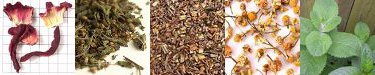
Since this blog has far more subscribers now than it did a year ago, I periodically like to bring attention to some old posts that many of the newer readers may have missed...and today I want to bring attention to posts on the topic of herbs and herbal teas. Pictured is a collage giving a hint of what these posts have to offer:


Yes, I just said "herbal tea", a technically incorrect term which nonetheless is in widespread usage. This leads into my first post:

  • Is herbal tea tea? - In this post I explain why I use the term herbal tea both in this blog and on RateTea, even though herbal teas are not tea.

  • Monarda Tea Review - A review of herbal tea made from a plant of the Monarda genus, harvested locally in Delaware, with photos both of the plant and the steeping process.

  • Rooibos Protects Against Gamma Rays - I just had to draw attention to this post, which sounds too outrageous to be true, and surprisingly, is not.

  • Pineapple Sage Tea - Salvia Elegans - A post, with a photo, of one of my favorite plants to brew herbal tea from, and discussion of why you are unlikely to find this herb for sale on the market: this herb, delicious fresh, does not dry well.


Enjoy!

Monday, September 19, 2011

Red Shiso (Perilla) for Herbal Tea

In this post I want to write about a fascinating herb which is important both as an herbal tea its own right, for blending with Japanese green teas, and for culinary uses. The English common name is Perilla, but as this herb is not well-known in Western cultures, and many people have not heard of it under this name. In Japanese, it is referred to as Shiso(紫蘇). If you want to learn more about this herb, there is a good Wikipedia page on perilla. The plant is in the mint family, the same family which also contains basil and coleus. Here is a picture of red shiso, a red-leafed variety of Perilla frutescens (there are several different species in the Perilla genus); this picture shows the clear visual resemblance to basil and coleus:


Shiso has a variety of uses. One of them is in blending with Japanese green tea, usually sencha. On RateTea I created a page for Shiso sencha, but the only two listings have both been discontinued. I haven't exhaustively searched for other providers of this sort of blend, but a quick google search shows that they are available, so hopefully I can get to adding some more soon. In Japan, shiso is used not only as a seasoning but also a vegetable.

The flavor and aroma of Shiso is interesting...it is relatively mild but has a lot of different components to it. It is mildly suggestive of anise or licorice, but also somewhat resembles mint and basil, and it has a faint skunky quality. It is milder in flavor than basil and much milder than mint. I have found that many people find it very pleasing, but a small number of people find it to have an unpleasant aroma.

Perilla / Shiso Naturalizes Easily:

I took this photo in an alley or very small street in center city Philadelphia. This plant is widely used as a landscaping plant in Philadelphia, often co-planted with the tropical plant Coleus, which bears superficial resemblance to it. But, in contrast to the tropical Coleus, which cannot survive the cold winters in temperate climates, Perilla is adapted to cold-winter regions, and will easily naturalize. In Philadelphia and surrounding areas, it grows wild, coming up from seed (and usually retaining its red color). Some people even view it as an invasive species. Here is a picture of it coming up wild in a Philadelphia sidewalk:


Perilla is a highly vigorous plant, growing in between cracks in brick sidewalks, up against buildings, and in flower beds. As it is often planted deliberately, it's sometimes hard to tell where it has been planted and where it has come up naturally.

Herbal Tea from Red Shiso:

I gathered a bunch of this plant while on a walk in my neighborhood the other day, and brewed up a batch of it as a fresh herbal tea. The infusion shows a brownish purple color:


It was quite delicious. Like the dry leaf, the infusion smelled somewhere in between anise, basil, and mint, and had a slightly skunky finish. It was exceptionally smooth on the palate, and had a slightly sweet flavor, with only a hint of bitterness, and no astringency. Although some people might not like it because of the mild skunkiness, overall, I found this drink to be very pleasing and I could see drinking this regularly.

Eating Perilla:

In my last post, herbal infusions and cooked vegetable broth, I made the point that we often discard the broth after cooking vegetables, and that this broth can be viewed as an herbal infusion, and drunk. Conversely, when brewing an herbal infusion from fresh leaves, instead of discarding the steeped leaves, we can eat them as a vegetable. In accordance with the Japanese use of Shiso as a vegetable, I decided to eat the leaves leftover after steeping, and they were delicious! They had a mild flavor, similar to the infusion, and were fairly tender in texture, certainly more tender than a variety of greens, like collards or kale, which are widely consumed in the U.S.

Have you tried Shiso or Perilla?

Did you know about this herb before reading this post? Have you ever used it as a seasoning? Grown it? Eaten it? Infused it, either on its own, or blending it with sencha or other tea?

Friday, September 16, 2011

Herbal Infusions and Cooked Vegetable Broth

Pictured below is an herbal infusion: for once, I actually am not using the term herbal tea because there is nothing remotely tea-like about the process I used to create this liquid:


What is it? It looks a little bit like hibiscus tea, but it's not...a little too light perhaps? It does not taste remotely like hibiscus. This is nothing you'd ever buy at a tea or herb shop, it's the broth left over after cooking vegetables, a specific type of cooked green. Red-veined amaranth leaves, to be specific, called xian cai(莧菜/苋菜) in Chinese. Here are the greens themselves, after cooking:


I found the leaves to have a flavor most closely resembling green beans, but with suggestions of beets and asparagus. They tasted very familiar, even though I have never consciously eaten them before. If you click on the photo of the cooked greens, you can read more about my experience cooking and eating them. In contrast to some new vegetables, which often become more of an acquired taste, I think this vegetable would be pretty accessible to someone who likes the more familiar Western cooked greens and other vegetables.

What is amaranth?

In the U.S., amaranth is most known for its use as an alternative grain; it is generally available in health food stores, and is also gluten-free. It is also a relative of quinoa. In China and India, especially in warmer regions, however, amaranth is widely used as a cooked vegetable. Amaranth thrives in hot climates with poor soil, where the heat and soil are poor for growing greens like spinach that are popular in northern climates. I first learned of amaranth's use as a cooked green from an Indian gardener in Cleveland.

Vegetable Broth vs. Herbal Tea:

In our modern society, when we cook vegetables, we often discard the broth, viewing it as waste. Yet we then go out and buy herbal teas, carefully steep them, and drink them. At times, we even drink foul-tasting concoctions in search of their supposed "health benefits". In this post I want to highlight something so simple it's almost mindless. When you cook vegetables, the resulting leftover water is an herbal infusion; it's packed with vitamins, minerals, and beneficial phytochemicals--anything water-soluble goes out in the broth. And it's fresher and more nutritious than any infusion that you could make from dried herbs, as the drying process results in considerable loss and degradation of vitamins and flavor.

There are a few cases where it is not good to drink vegetable broth; some plants used as vegetables, such as pokeweed, have water-soluble toxins and which are only edible after repeated boiling and draining, but these plants are generally not widely available at stores or markets in the U.S.

What did this amaranth broth taste like?

If you're not used to drinking the leftover broth after cooking vegetables, it may taste a bit strange to you. The flavor is the very essence of vegetal...after all, the word "vegetal" is just an attempt to describe the aromas and flavors of vegetables when they occur in tea or other food or drink where we may not expect them.

It was definitely not the sort of thing that I would seek out to drink as a beverage, on its own, but it was also not at all unpleasant. Perhaps I would acquire a taste for it if I drank this sort of thing more. But the experience was interesting to me, and I think will inform my palate when tasting teas and herbal teas that have vegetal qualities.

What do you think?

Some questions come to my mind. Do you ever drink the leftover broth after cooking vegetables? What is the cutoff between vegetable broth, and herbal tea brewed from fresh herbs? Does this distinction only lie in intentions? What do you think of the vegetal qualities in tea? And have you ever tried amaranth greens?

Thursday, September 15, 2011

Ginger in Tea and Herbal Teas

I love ginger; it is one of my favorite spices and I use it heavily in cooking. I have even grown ginger...it is relatively easy to grow indoors. In the spirit of raising awareness between the food, tea, and herbs we eat, and the plants they come from, here is a picture of a ginger rhizome, sprouting:


Ginger is the rhizome of a grassy plant, Zingiber officinale; the rhizome is storage area below the ground, looking like a root but technically part of the plant's stem; the rhizome stores energy, nutrients, and water so that if the above-ground part of the plant is threatened or dies, the plant can regrow when conditions are right. This adaptation allows ginger to survive drought, as well as having its leaves and stems eaten. The strong-tasting chemicals which give ginger its flavor are concentrated in the rhizome, to protect this most important part of the plant. I wish I had a picture of the ginger plant that I grew for two years, but I cannot find one. The ginger plant looks like a grass, here's a photo of the ginger plant on Wikimedia commons. This picture looks nearly exactly like what my plant looked like.

This next photo shows fresh ginger root which I have sliced in order to brew up a batch of iced tea:


Dried Ginger vs. Fresh Ginger:

One reason I feel particularly compelled to share these pictures and this post is that, over the years, I've tried a number of blends containing dried ginger, and they just don't do it for me. I think that ginger is one of those spices that is best fresh, and that loses most of its character when dried.

Still, I do sometimes enjoy teas and herbs which have been blended with dried ginger. I will say, I do not have any dried ginger in my cabinet, and I have never bought it; fresh ginger root is a staple in my household.

Medicinal Properties of Ginger:

Ginger is a fairly common ingredient in herbal blends. It has potent medicinal properties, or supposed "health benefits", to use a buzzword I have become slightly annoyed with lately. Ginger is used traditionally to settle the stomach and provide relief from nausea. I personally find it to be very effective for this purpose. Wikipedia's article on ginger is fairly well-referenced and explains these medicinal uses, and what is known of the chemistry of ginger, in more depth.

Ginger as a Flavoring for Tea:

Ginger is also used as a flavoring in black tea, sometimes on its own, but often when paired with peach. Adagio Teas sells a black tea flavored with ginger, and a number of brands, including Adagio, Republic of Tea, Revolution, Stash, Bentley's, and many others, sell ginger peach tea. These ginger-peach flavored teas, usually but not always black teas, are very popular. I used to regularly visit a coffee shop in University Heights, OH, which sold a ginger peach tea, and it seemed that more customers ordered this tea than all the others combined. I will say, even though I'm not a huge fan of flavored teas, I do like this combination.

Ginger is also a common, but not necessarily defining ingredient in masala chai or spiced tea. I like including some ginger in chai, but I generally do not miss it when it is absent (unlike cardamom).

Ginger in Herbal Blends:

Ginger is widely used in herbal blends. One of the most common combinations is lemon ginger. While I find that lemon and ginger go very well together (one of my favorite combinations for an iced herbal drink is boiling fresh lemongrass and fresh ginger root, then chilling it), I find that most herbal blends focusing on ginger, and relying on dried ginger, just don't do it for me. Teatulia has an odd ginger herbal infusion that also includes the herb Vasaka (Justicia adhatoda). I wasn't really a fan of this either...the Vasaka is extremely bitter; while I normally like bitter flavors, it was too bitter for me, so I suspect it is probably too bitter for a majority of others as well.

How about you?

Do you ever use fresh ginger as a flavoring for tea, or for making herbal infusions? Do you like the presence of ginger in masala chai, or other blends? Do you notice much of a difference between fresh and dried ginger? Have you ever tried growing ginger?

Tuesday, July 12, 2011

Iced Teas of the Day: Pure Tea, and Herbal Blends

Today is a very hot day here in Philadelphia. It's currently 91, and the projected high was 96 but I see it's now downgraded to 94. I don't mind the heat, honestly, but I have switched to iced tea after a single cup of hot tea this morning. I have two batches brewed up:

Iced Ali shan oolong:

The caffeinated iced tea I'm drinking, the only true tea, is an iced A Li Son Oolong from Tradition, which is a surprisingly inexpensive whole-leaf Taiwanese high-mountain greener oolong. I have never made it iced, and I'm curious how it would turn out.

It's good, not my favorite iced tea, but good. One thing that is very interesting to me, however, is how different the aroma and flavor is of the iced tea compared to the hot tea. This is a tea that I normally brew with multiple brief infusions, although I have brewed it with a single, long infusion to compare. With iced tea, I make only a single, long infusion (this one was about 15 minutes--this is a whole-leaf tea with very large leaves, and it needs a long time to fully infuse.)

The result is a pale yellow-green cup with surprising opacity (contrasting with the very clear cup if brewing this tea hot--does anyone have a clue as to a scientific explanation of this?). The aroma is honey-like, with tones of wood. Much more floral, and with a lighter overall character, than when drinking it iced. Smoother flavor. It really tastes as if I have added honey, and I have not added any.

An iced herbal tea:

My other iced "tea" was an herbal blend, containing no actual tea. For a four-cup batch, I used two teaspoons of rooibos, two heaping teaspoons of lemon verbena, and about the equivalent of two teaspoons of dried lemon balm, which I had grown myself in my garden in Delaware. This is a similar blend to an iced tea+herb blend and an iced herbal blend I wrote about earlier. I have been refining it and I love this batch, but now I'm out of lemon balm so I'll need to switch it up.

Lemon balm is interchangeable with lemon verbena; I find the two plants are most similar of all the lemon-scented herbs, which makes sense as they are the most closely related, both being in the Lamiales order (which contains the mint family and the verbena/vervain family, as well as other food plants such as olive and sesame, and some favorite floral scents including lilac). I also have been buying fresh lemongrass, which is available at the reading terminal market, and have been experimenting steeping it fresh in hot water to make an herbal tea, which I have tried both hot and iced, and I hope to write more about that soon.

Thursday, June 30, 2011

Anise Hyssop Herbal Tea

The other day I bought some fresh Anise Hyssop at a farmer's market. It was quite inexpensive, $1.50 for a massive bunch. Unfortunately, I did not think to write this post until after I used up the last of the leaves, so I have no photograph of the actual bunch that I bought. Here is a photo courtesy of Wayne Ray at Wikimedia Commons:


Anise hyssop is a plant in the mint family. Although it looks a lot like "regular" hyssop (Hyssopus sp.), hence the name, it is not closely related; both of these plants are in the mint family but are not closely related beyond that. Anise hyssop is interesting in that it is one of the aromatic, mint-family plants that is native to North America.

Why native plants?

As I have become interested in ecology, I have started to seek out native plants from the mint family, such as Monarda, for use in herbal teas, in contrast to the non-native, introduced plants from Asia and Europe. Most of the herbal teas widely consumed in the United States, such as chamomile, mint, and numerous others, are non-native plants here. Although mint (spearmint, apple mint, peppermint, etc.) and chamomile can both be grown in the U.S., they are not native; in some cases, these plants and other herbs have actually become invasive species, escaping into wild ecosystems and causing problems. Anyone who has grown mint in a temperate climate will testify to the way it can take over an entire garden, often choking out other plants. This same effect can happen in wild ecosystems. Part of the reason for this is that there are few native insects adapted to eat non-native plants.

There is a wealth of native plants available in North America that can be used to make herbal teas, both for beverages and medicinal purposes. Growing native plants is often better for local ecosystems, as they are eaten by native insects and thus help feed birds and create habitat for all varieties of animals, and are less likely to act as reservoirs for invasive pests and diseases. And, perhaps most importantly of all, native plants do not become a problem if they escape cultivation and seed back into a wild ecosystem--quite to the contrary, growing native plants in your garden can help provide a healthy population of these plants so that the population remains strong and diverse in nature.

I am sharing this info to explain what has motivated me to sample this herb and some of the other herbs I have been exploring for use in herbal teas.

The Review of Anise Hyssop Tea:

The leaves of this plant had a very mild aroma, so I steeped a very large quantity of leaf to make a single cup. I brought water to a boil, added the leaves, and then let it sit on very low heat for about 10 minutes. This produced a cup that had a light green color, paler than most green tea, and a moderately strong aroma.

The aroma was predominately licorice, with a strong suggestion of wintergreen, and other more generic vegetal tones. Licorice and anise are similar aromas, and the name anise hyssop suggests anise, but I found that the aroma resembled licorice more than anise. The vegetal tones are probably due to the fact that I brewed this herbal tea from fresh leaves; I suspect that if the herb were dried it would be significantly less vegetal in aroma.

The flavor is extremely smooth, and unusually sweet, so sweet it even tastes sweetened, as if honey had been added. There is almost no bitterness or astrigency. This is among the sweetest, smoothest infusions I have ever sampled from a plant. An informational page on anise hyssop run by the government of Manitoba, says that this herb was used as a sweetener by Native Americans, and I can believe that!

I also tried making an iced herbal tea from the anise hyssop (without blending it with anything), and I found it very pleasing. When iced, the vegetal tones are diminished somewhat, and one is left with a mild, sweet, drink that tastes like honey and licorice with a little wintergreen thrown in.

How does it make me feel?

I have had several cups of the brew from this plant, hot and iced. It seems to have a somewhat dampening effect on my body as a whole. I notice that it tends to fairly strongly suppress my appetite, giving me a sensation of fullness even after drinking a single cup. It does not necessarily relax me, but I felt slowed down and less energetic after drinking it. My stomach felt very calm and settled, but I felt uninterested in eating much food for some time after drinking it.

I wasn't crazy about the effects of this tea, given how I was feeling for starters, but I imagine that in some cases, it might have a positive effect. I also think it would make an excellent choice of a minor ingredient in an herbal blend, for people looking to sweeten a blend, as it adds sweetness without adding bitterness or astringency. I suspect that anise hyssop has some possibly potent medicinal uses, however, I was not able to find any scientific research on it, and the information on traditional use by Native Americans that I was able to find in a quick web search was brief and conflicting, not painting a clear picture of this plant's medicinal properties. This would be an interesting topic for further research, however.

Concluding questions:

Have you ever tried anise hyssop? And do you have any other suggestions about herbs, native to North America, that I might try infusing in my quest to discover more plants for herbal tea?

Tuesday, June 7, 2011

Iced Herbal Tea: Green Rooibos, Lemon Verbena, Lemon Balm, and Vana Tulsi

With another four hot days in store here (tomorrow they are forecasting 98 degrees in Philadelphia), I have decided to make more iced tea, including both true tea and herbal tea. Like the previous batch, I made about four cups worth, which fills about three of the tall glasses pictured:


As a side note, I really like the view out my window in my new apartment. This is the view looking out from my work desk. You can see the amber color of this tea; the color is significantly darker than one would get from brewing a typical green tea in the same manner. I believe it is the green rooibos and vana tulsi which impart the darker color.

I chose vana tulsi for this blend because it has a fresher, more herbaceous aroma, and is a little lighter, whereas the other types of holy basil have a more warming, spicy aroma which I think would blend less well with the other herbs.

The Recipe:

It's hard for me to get a good estimate of the amount of lemon balm used, because I grew and dried it, so it is much coarser in leaf texture than the other herbs. The amount I put in occupied much more space than the other herbs, but if it had been crushed to a similar texture as the lemon verbena, I'm estimating it would have been about two teaspoon's worth.

I steeped this batch for about 8 minutes, in one cup of water which I heated to boiling, then I diluted with cold water and cooled it in the fridge before drinking it. I did not add any ice.

The Result and Review:

In this blend, the vana tulsi overpowers the other herbs, so next time I'll use less. Surprisingly, with all the lemony herbs, I notice the lemon least of all in the aroma. The overall character is very herbaceous, summery, and reminds me of a garden. Pleasing, delicately spicy, yet refreshing. With a balance of warming and cooling aromas, this is not a "straight cool" herbal tea the way iced mint tea is. Flavor is mild, not much bitterness or sourness, but there is a fairly astringent aftertaste. Overall strength was moderate; flavorful, but I could drink it in quantity too.

This blend was very enjoyable, but I think it could be improved. Next time, I'll use less vana tulsi.

Friday, May 20, 2011

Pineapple Sage Overwinters in Delaware!

I was pleasantly surprised the other day when I found my pineapple sage resprout, when visiting my old garden in Delaware (which I have since moved from):


A while back, I wrote about Pineapple sage, Salvia elegans, which I use to make a delicious herbal tea. That post shows a picture of the plant from last year.

According to Floridata's sheet on Pineapple sage, this plant is hardy (in the sense of resprouting from the ground) in zones 8 and 9. Northern Delaware lies near the border of USDA Hardiness Zones 7a and 6b. It seemed wishful thinking to keep this plant through the winter, but I tried my best anyway. I had planted the plant in a sunny but protected location, an area near the building with ample winter sun. I applied large quantities of mulch, mostly tea leaf mulch, to the base of the plant.

Although I was surprised to see this plant, pictured above, resprout after surviving the winter, it was a rather mild winter temperature-wise, and the plant was planted in a very sheltered location.

It makes me wonder though: could one grow a tea plant in Delaware? I suspect, with the conditions above, that I probably could, although a colder winter might be problematic for it. Some of the hardiest varieties of Camellia sinensis are reported to be much hardier than the zones specified for pineapple sage.