Showing posts with label writing. Show all posts

Wednesday, October 2, 2013

SpontaneiTea: A Second New Tea Blog

Although this blog isn't very active any more, I wanted to announce a second, new tea blog that I've founded more recently. This blog is SpontaneiTea. It is hosted on Tea Trade. I will still be running Teacology, although I'm anticipating that I will tend to update SpontaneiTea more often because the posts there will be of a more casual nature.


This blog has been going for some time now, so I want to highlight a few of the posts to give you an idea of what sorts of things you'll find there:


Why yet another new tea blog?

After working on Teacology for some time, where I was putting a lot more effort and energy into posts, and thus updating much less frequently and much less regularly, I realized that I wanted an additional outlet for more casual writings about tea like I used to share on this blog. I occasionally have been posting about tea on my personal Tumblr, but it's not the same.

Why Tea Trade?

Tea Trade is a blogging community designed by and for tea lovers, and it has an active community of tea bloggers. It seemed a logical place for a casual tea-related blog, one oriented a little more towards tea industry insiders and hobbyists, whereas Wordpress seemed better suited to reaching a more general audience.

Three (four?!?) tea blogs now: uh oh, am I obsessed?

Yes, I know it is absurd, I now have three tea blogs, four if you count RateTea's Tumblr. But hey, it makes sense to me? Different blogging platforms have different strengths and I think are good for different things.

I hope you enjoy this new blog!

Wednesday, November 28, 2012

Why I Stopped Updating so Frequently

It's been aeons since I updated! Well, more accurately, since some time late-September, a little over two months.

This morning I'm drinking Dao Ren Tea from Mountain Rose Herbs, a pretty straightforward Zhejiang green tea, organic certified, that was sold for a very reasonable price. You can read my review on RateTea. I have still been posting reviews there.

So why did I stop updating so frequently?

Short story, I wasn't getting anywhere near as much out of blogging as I was putting in. RateTea requires some maintenance and upkeep, and RateTea is more of a priority than this blog. Some good news is that RateTea's traffic has picked up and is close to establishing a new record high level!

I really appreciate the comments I get here, but to be blunt, my posts here don't attract enough attention to make it worth my while to post as often as I was. So I needed a break. I don't feel satisfied with putting as much energy as I was into my writing, if my audience is as small as it was. I've been brainstorming why this is. I have another blog on Wordpress.com that I've used as a convenient comparison, and I am starting to think that Wordpress is a better blogging platform for attracting views. On wordpress, even without having any subscribers, I would post something and BAM, a lot of people would read it, and I also would get fewer spam comments. (I get an unbelievable amount of spam here on blogger, AND the spam filter frequently sends sincere comments into the spam bin, from lovely people such as Steph of Steph's Cup of Tea or The Teaist.)

I think blogger has poor spam control, both for spam blogs and comments, and I think this hurts blogger's visibility. Over the past year, I've reported dozens of spam blogs to Blogger, only to see them stay up for months, and some never get taken down. With Wordpress.com, it's different. I report, and usually I get an email 3 hours later, a personal reply from a human being, thanking me, and the blog is taken down immediately. I love this. So I've been toying with the idea of moving this blog over to Wordpress.com.

I also keep considering the idea of starting a blog hosted on Tea Trade, but the site's slow load times have been a barrier to me doing this. But Tea Trade does have a really rich community of tea bloggers, and it makes a difference to me that it's run by people, Jackie and Peter, who really seem to love tea and love reading and writing.

More reasons:

But there are a lot of other reasons that I slowed down blogging. I also have a lot of other things going on in my life, and I've been publishing more things online on other topics and in other avenues. Here are some things I have going on:

Why This Way:


One of the most exciting things is Why This Way, which is a new group that some of my friends and I co-founded back in January. It's a belief system and organization that is run by consensus, a little like a hybrid of organized religion and Wikipedia. We started out calling it a religion, but after bringing more people into the group who did not think it was a religion, because it is run by consensus, we stopped presenting it as such. It's really hard to know what to present it as. It presents a system of beliefs and practices that are related to all aspects of life--but it is not exclusive with other religions or belief systems.

I think this group can potentially be really transformative. At the beginning of this group, we developed a way of communicating which is based on respect and truthfulness, which is designed to create fulfilling, positive dialogue on controversial subjects. So far, it's been working very well. Our group has had people participating from a broad range of religious traditions, and we've had a remarkably easy time reaching consensus on normally controversial or emotionally-charged issues.

I want to write more about this, but it's getting a bit off-topic here so back to tea.

Branching out:

I've also been thinking more creatively about ways to reach a broader audience of tea drinkers. Sometimes I feel like the existing tea subcultures on the web are a bit saturated and somewhat stagnant. Blogs have their dedicated followings, RateTea has a certain type of viewer, as does Steepster. There is some overlap, with a few die-hard fanatics like myself having presences on virtually all major online tea communities. But I also think there are untapped resources.

A while back I discovered the tea subreddit, which I wrote about. I like this community because it seems to have more of an influx of new people--but it's also limited by the format. If you like upvoting, downvoting, and brief comments with occasional links, that's great, but it's not always my preferred medium of expression. More recently I discovered Tumblr. Tumblr is a little bit of a big uncensored ball of teen angst (something I can relate to and appreciate), but it does have a lot of people on it who are interested in tea, who sometimes post about tea.

I also have been publishing more tea stuff on Squidoo lately. I've been finding my stuff on Squidoo is attracting more of an audience than my blog, relative to the effort I put into it, and the site also provides a lot of interesting opportunities for engagement, including polls, discussions, quizzes, and the like.

So I think I want to dedicate more energy to exploring these other communities, and perhaps searching for yet more.

But I'm hoping to keep updating this blog regularly--although not as frequently as before. I'm aiming for 3-5 posts a month now.

Monday, July 16, 2012

Tea Trade: A Tea Blogging Platform, Online Tea Marketplace, And Forums

Today's post features a website that I have been a big fan of for some time, Tea Trade. Tea Trade, founded by Jackie and Peter Davenport (who also are behind Leafbox Tea), is an extensive online community centering around tea, which offers a very different array of tools from any other online tea community.

I think Tea Trade is of particular interest to individuals, tea bloggers, and people who run very small tea businesses, although people involved in larger tea businesses could also benefit from being aware of and perhaps participating in the community there as well.


The domain name, Teatra.de, is a classic example of a domain hack, using the top-level domain for Germany, .de, to spell out the name.

What does Tea Trade offer?

Tea Trade has several different features, which are all quite well integrated. The simplest to participate in are the forums, which are moderately active, and I find consistently have intelligent and interesting conversation. The site also offers blog hosting, making it the only blogging platform which is custom-tailored to the needs of tea bloggers. And of course, there is the marketplace, the centerpiece of the site, a place that allows individuals to set up mini tea stores.

What do I like about the site?

I find Tea Trade easy to use and navigate, and clean and professional looking. The site is extensive, owing towards the rich contributions made by the members of the site, and I feel that the community and discussion on the site tends towards the more thoughtful and deeper side among online communities. I suspect that this has something to do with the site's emphasis on blogging, which attracts people who are interested in reading, writing, and critical thinking.

The marketplace also offers a unique option for people interested in selling tea, or tea-related merchandise on a small scale. In my post Create The Conditions For Your Business To Thrive: Che Guevara Offers Business Advice, I talk about how people can create businesses out of thin air, avoiding the need for extensive start-up costs, and growing a business organically. Tea Trade offers unique and powerful tools for people looking to start or grow very small businesses, and it also allows people who may not be interested in starting a full-fledged business to dabble with buying or selling tea on a small scale.

Suggestions for improving Tea Trade:

My one major lament about Tea Trade is the site's slow speed and lack of responsiveness. Pages on the site load considerably slower than I am used to (or comfortable with). My experience timing page loads on the site is that the page load times tend to average around 3-6 seconds for the page to display, with many pages taking 4 or so more seconds to load additional content. As I explained in my post on website speed and responsiveness, I think that this is slow enough that it is a point of concern, the "weakest link" in what Tea Trade has to offer.

I would really like to see Tea Trade address the issue of speed. I think improving the speed (ideally to under 1 second page load times, although averaging around 2 seconds across the board would be a really great improvement over the current speed) would be a major improvement to me, and would lead me to want to participate much more in the community there, possibly even hosting a blog there.

Another issue which is worth mentioning is downtime. Nearly all websites experience some downtime; last month, RateTea was down for a few hours, and a few years ago, it was down for around 12 hours. I even encounter major sites like Blogger and Wordpress giving errors or going down from time to time. But I think Tea Trade has experienced enough downtime that I'd recommend for Jackie and Peter to make it a priority to address this issue as well.

In terms of the site itself, I think it is wonderful, and a great resource.

What do you think?

Are you familiar with Tea Trade? Have you bought or sold products through their marketplace? Have any of you had experience with their tea blog hosting? How do you feel about the site's speed and responsiveness? Have you ever experienced the site being down when trying to access it? Do you have anything else to say about the site?

Tuesday, June 19, 2012

Tea Nerd: Featured (Inactive) Tea Blog

Today I want to do something a little odd and unusual, which is to feature a tea blog that is no longer active, and that has not had a single post since March of 2011. This blog is Tea Nerd, run by Brent Hughes. I haven't been in contact with Brent, so I have no idea what he's been up to, but I do know that this blog was most active before I started blogging about tea.


Incidentally, Brent Hughes was instrumental in setting up WikiCha, a tea wiki that is being administered by Brandon of Wrong Fu Cha, and a site that I would like to see grow and thrive.

Why am I featuring an inactive blog?

There are two answers to this question. One is that I obviously like the blog, and I think it might be interesting for people to read, and I want to recognize Brent for his contributions through this blog. But the second question is deeper.

People often think of blogs as a time-sensitive phenomenon, like a newspaper, something about the here and now. But many blogs are surprisingly timeless. Most blogs tell a story, and stories are usually interesting to read regardless of whether they're happening in real time, or happened years ago. A lot of blogs also have posts about topics that are timeless. I find this is especially true if you read through this blog.

What I like about this blog?

  • I like the way the reviews are written. I get the sense from reading the blog that Brent knows a lot about tea and that I can trust his perception. It's funny, because, when reading old blog posts or browsing inactive blogs, reviews are usually the last things I look for, but I like the style in which the reviews are written. There's quite a lot of detail, and for some reason, I feel like I can relate to the way in which the reviews are written.
  • Little random things, like how Brent names his houseplants (incidentally, I also have a jade plant), and writes about it in his blog when he slows down posting, rather than just disappearing without notice. I also like his writings about mindfulness, with an interesting and relevant John Cage quote.
  • Brent also seems to enjoy trying teas from different regions. I particularly liked his review of Hawaiian tea from Onomea Tea Company.

If you enjoy perusing inactive blogs like me, you might want to take a peek at this one. And who knows, Brent may post again at some point!

Monday, May 7, 2012

Reading And Writing Tea Reviews: How Many Teas Like This Have You Tried?

This post is about reviewing teas, and more specifically, about the question of how many similar teas the reviewer has reviewed, when writing a review. I find this question to be of key importance both when writing tea reviews and when reading reviews that others have written.

When reading reviews:

When you are reading reviews, trying to decide whether or not you want to buy a particular tea, or trying to decide what tea to buy, it can be important to know how experienced the reviewer is. As an example, I would trust a review of aged sheng Pu-erh on Bearsblog, or The Half-Dipper because both of these bloggers have been reviewing these teas for a very long time. And similarly, I trust what Gingko writes about Chinese green teas on the Life in Teacup Blog.

This may seem like just common sense, but it flows into a rather nifty (and to my knowledge, unique) feature on RateTea that many of you may not know about, and that I highlight below.

When writing reviews:

When I write tea reviews, I usually include at least a brief mention in the text of the review that communicates how experienced I am at reviewing a tea. The statement can be direct, or it can be indirect, such as by comparison to other teas (implying that you have sampled these other teas). Examples of these sorts of statements include:

  • This was the first green tea from Sri Lanka that I have ever sampled. It was similar to a number of Chinese green teas, and rather unlike any of the green teas from India that I have tried in the past.
  • This is my all-time favorite among the dozens of Darjeeling first flush black teas that I have sampled.

The first statement clearly communicates that the person is inexperienced with green teas from Sri Lanka, yet is quite familiar with Chinese and even Indian green teas. I write these sorts of statements in my reviews mainly because I find it helpful when reviewers share these sorts of statements, and I want to write reviews that can be useful to others.

Something useful that RateTea does, that you may have overlooked:

Because a reviewer's level of experience when reviewing a tea can profoundly change how you read the review, I've added a feature to RateTea that clearly displays on the page for each tea review how experienced the reviewer is at reviewing teas, both in general, and teas of the particular style, as well as teas from the particular company in question. The following screenshot shows this feature:


The reviewer box on this tea shows that Sylvia has reviewed 4 Ceylon Black Teas, 3 teas from Upton Tea imports, and 72 total teas. The box also shows that she has been a member of the site since March of 2011. Note the level of specificity: the site identifies the number of Ceylon Black Teas, not just any black teas, which the reviewer has reviewed. The same goes for any specific style or variety of tea.

This feature is of particular interest to serious tea drinkers, as, when buying a specific variety of tea such as silver needle white tea, or golden osmanthus (Huang jin gui) oolong, it is more important to know if the reviewer has reviewed any of these specific teas, rather than just reviewing a lot of generic white or oolong teas. Also of interest to serious tea drinkers, RateTea keeps pure teas and flavored teas completely separate, so reviews of flavored teas will not count towards the count of pure teas of a given type (green, white, etc.). This feature is one of the places where RateTea's detailed and deep database truly shines. It would not be possible to even implement this sort of feature without this sort of level of depth, a level that has made RateTea more labor-intensive to develop and maintain. I am truly hoping that this effort will pay off in terms of recognition by and participation from the people who are most interested in promoting the culture of single-origin, pure teas.

If you like it, then use it!

If you like this sort of feature, I would encourage you to use it! Review pure teas of specific varieties on the site, and become viewed as more authoritative on the site, for reviewing these specific kinds of tea. Sadly, the teas getting the bulk of the reviews are still tea bag teas from mainstream brands, mostly blends. I think the true strengths of the site show through only on single-origin teas of named varieties, and I would really like to see more participation by people who are enthusiastic about drinking these types of teas.

What do you think?

When you read tea reviews, how important is it to you to know how experienced the reviewer is at drinking or sampling similar teas? How much of this info do you share in your own reviews? What do you think about the RateTea feature I highlighted, which shows the number of teas of a specific style that a reviewer has reviewed?

Monday, April 9, 2012

Conveying Authority While Writing on Controversial Subjects

Recently I wrote about whether or not and how to host informational tea articles on tea company websites. One point I made in that article was that well-written informational articles can convey an impression of authority or expertise, which can benefit a tea company or other business.

In this article, I want to focus on the writing and research itself and explain how people can convey authority and expertise through writing. Merely knowing a lot is not enough to impress someone: you must find a good way to present your knowledge.

Conveying authority through writing:

I believe that well-written informational articles can convey an instant impression of authority. I tend to be inherently skeptical of unfamiliar authors, but even when I am completely unfamiliar with the author or publication, certain aspects about the way someone writes can impress me and lead me to perceive the person as authoritative in their subject. While I have a lot to say about writing, what constitutes "good" writing can be a bit subjective, and is a whole topic in and of itself.

I don't think of myself as a very good writer, but I do think I understand certain key points that a lot of authors miss. A lot of these points boil down to how and when to be careful about citing sources, and about how to present statements about potentially controversial material. I sum these ideas up with a simple concept that I'd like to call the danger zone.

Be aware of what society considers "common knowledge" when writing:

When writing about tea, I find it useful to think about the collective consciousness about tea in society at large, that is, the body of beliefs that is "common knowledge"; this does not mean that everyone knows all the facts in this zone, just that a lot of people know many of them. This body of knowledge is going to be different in different countries and cultures, and it will also be different when you write for different audiences; it's worth putting a bit of thought into the questions of who your audience is. For a tea company writing informational material about tea, your audience might be your customer base or pool of potential customers. But no matter what group you are considering, there is going to be a body of knowledge that most people know about tea, and material outside this realm.

And like any body of knowledge, this public tea knowledge is going to include both truths and falsehoods. I want to denote this knowledge by the following diagram:


As an example, the green zone might contain statements like "Irish Breakfast is a strong black tea." or "The Japanese drink mostly green tea." The blue zone might contain more esoteric statements like: "Huang Jin Gui, meaning golden osmanthus, is a type of Oolong tea produced from a specific varietal of the tea plant." The dark red zone, which is what I call the danger zone, contains common myths, like: "White tea is lower in caffeine than black tea."

Writing in the danger zone:

A key guiding principle in conveying authority, I have found, is to delve into the danger zone, but be most cautious in this zone. When writing in this zone, I find it is more important than normal to follow up your statements with citations to sources backing your points, and it is also important to begin the statements by presenting the "common misinformation". The goal is to connect your statement into the web of knowledge of your readers.


I find it useful to picture people's belief systems and knowledge about the world as a web of related ideas or beliefs, like the above diagram. Every person's knowledge includes true (green) and false (red) statements. Connecting with readers about true statements is easy, but if you write exclusively about true statements that people already know, you will bore your readers and lose your audience.

If you make a statement about some piece of knowledge in the danger zone without explanation, you may lose some of your readers, because they might think that you don't know what you're talking about. People have a natural tendency to evaluate new material presented to them by comparing it to the body of knowledge in their head; if the information doesn't fit, people become distrustful of the source. We all do this, and it's not necessarily a bad thing. But it's important to be aware of it when writing about a piece of information about which there is widespread misinformation circulating in society. Some examples of how I like to handle this:


  • (Regarding white tea) It is a widespread myth that white tea is lower in caffeine than other types of tea; there is no clear pattern of white teas being higher or lower in caffeine when compared to black teas or green teas. (Cite a source or link to a fuller explanation)

  • (Regarding the myth that green tea is the only "healthy" tea) Green tea received a lot of initial attention with respect to the health benefits of tea, largely for historical reasons: most of the early research on the health benefits of tea was conducted in Japan, where people drink almost exclusively green tea. Subsequent research has found evidence of health benefits of other types of tea as well, and there have been no thorough comparisons which have exhaustively established that green tea is any healthier than other types of tea.


These statements may not convince everyone, but I think that this approach is much more likely to do so than a mere assertion of some fact. And when you do convince someone, you have conveyed authority. People will come away from your writing thinking: "I just learned something new." and will attribute this to your writing, which makes it more likely that they'll come back for more.

What do you think?

Do you find this model for thinking about knowledge and writing to be at all accurate, useful, or helpful?

Friday, March 30, 2012

Informational Tea Articles On A Commercial Tea Website

This post, continuing my series on best practices for tea company websites, explores the question of whether or not, and how, to include informational articles about tea on your website.


This screenshot shows informational articles about tea on RateTea. There are already many websites, including tea company websites, blogs, and strictly informational sites, offering articles about tea, so it is important to have good reasons for deciding to write articles for your site.

There are many different reasons that tea companies choose to include informational articles on their site. These include:

  • Answering specific questions that your customers may have about your teas, or providing more information directly relevant to your customers.
  • Helping to generally raise the knowledge level both of your customers, and of people in general.
  • To convey an impression of authority or expertise, thus making a favorable impression on people and increasing the likelihood that they buy your teas.
  • To draw in traffic from search engines and other sources.


Of these purposes, I would say that the first is the most important, and the last (drawing in traffic) is a mindset that is best avoided, for reasons I explain below. My recommendations for the best practices in how to include articles on your site are as follows:

  • Share your unique expertise and knowledge, which leads into the next point:
  • Write in detail about your particular teas and their origins.
  • Avoid writing general informational / educational material about tea unless you are confident that you can write accurate articles, and that you have something unique to offer. If you aren't confident in these respects, you would do better to search and locate the best resources and link to them from your site.
  • Avoid using articles to draw in traffic to your site unless you really know what you're doing.


I am going to go into more detail on some of these points.

Sharing your unique expertise and knowledge:

If you have unique or specialized knowledge about tea that is not easily available anywhere else on the internet, this unique knowledge is probably your best material to write about. Examples of such unique knowledge include experiential accounts like the detailed descriptions of remote areas of Yunnan province that you can find in The Tea Urchin, or the discussion of Chinese green teas that you can find on the Life in Teacup Blog. Another great example is Bearsblog, which offers a level of depth of knowledge about Pu-erh that can be hard to find.

For some examples of tea companies whose information I like, I find that Upton Tea Imports offers some engaging takes on the history of the tea industry in the West, in their Upton Tea Quarterly. For a completely different sort of information, check out Norbu Tea; I find their descriptions of each tea to be highly informative, offering information that is not available elsewhere, and written with a personal touch that offers opinions and perceptions without making universal claims about how the customer will experience the tea. Another company with information about their teas that leaves a very good impression on me is Red Blossom Tea.

If you read this blog, you'll notice that I'm not as knowledgeable about tea as a lot of other tea people, who have been in the industry for years, who have travelled extensively to tea producing regions, or who have tried much more tea than me. My unique strengths lie in thinking holistically, and integrating discussion of tea with discussion of ecology, food culture, culture in general, business, and health. In any one of these areas, I have little unique knowledge to offer, but I think that the breadth of my knowledge stands out, and I have a knack for relating things to each other, so I choose to focus on writing articles that integrate subjects in unusual or novel ways.

Write in detail about your particular teas and their origins:

If your company is selling tea, you want to write first and foremost about the tea that you sell. You can write about the regions your tea comes from, how the tea is produced, its characteristics of flavor, aroma, and appearance, how to brew the tea, the history or origins of the tea, or any cultural practices surrounding the tea, and anything else that makes your teas stand out from the offerings of other companies.

Here are some examples of the following sorts of articles and pages:


All of these pages explain topics that are likely to be unfamiliar to a majority of tea drinkers. The pages on aracha and biodynamic tea are longer, whereas the page on the Kangra region is very brief. But all of these pages provide useful background information while highlighting something unique about the teas sold by these particular companies.

Be cautious about writing general informational or educational material about tea:

My advice, if you're going to write general informational articles about tea, is to actually do thorough research before writing them. If you don't want to do the research, don't write them. Having inaccurate articles on your site, besides spreading misinformation, can make a bad impression on potential customers (or on bloggers or webmasters who are considering linking to or helping promote your company), or, in extreme cases, even open you up to potential lawsuits.

As an example of such misinformation, here is a screenshot from an article hosted on the Republic of Tea website. I am bringing attention to this tea company, as always, because I like them as a company, and I'd like to see them update their articles to be more accurate, both because it is in their best interest, and because I want to help promote truthful and accurate information about tea.


The biggest claim that I take issue with in this article is the claim that white tea contains "virtually no caffeine". I've researched this topic extensively, citing the best scientific studies I could find, and summarized it on RateTea's page on the caffeine content of tea. What I found was that it is not possible to generalize about the caffeine content of tea based on type, and that white teas cover the full range of caffeine content from very low to very high (among teas). Furthermore, white teas made exclusively of buds, like those described here by Republic of Tea, are among the teas highest in caffeine. Unless Republic of Tea has tested their particular teas and established that their particular offerings are low in caffeine, this information is outright wrong, and even if their particular white teas all happen to be low in caffeine, the general statement made on the informational page is untrue.

This is the sort of information that, at best, makes a bad impression, and at worst, alienates customers or even opens a company up to lawsuits. As an example of how this sort of misinformation could open a company up to legal liability, even if the error made were in reality an innocent one, it would be easy to argue in court that Republic of Tea is using the claim about low caffeine to make white tea seem more appealing, and thus, to profit by making sales; the company emphasizes the claim of there being "virtually no caffeine", and presents this claim in the context of a claim that white tea is healthy. And can the false idea that white tea contains "virtually no caffeine" cause damages? Absolutely:

I once had a nasty drug interaction between an antibiotic that I was taking, and caffeine from white tea. While the interaction was not dangerous, it was extremely unpleasant, and there are other cases in which caffeine can pose dangerous and even life-threatening risks to people. In my case, I knew that white tea was not necessarily low in caffeine, and I simply under-estimated the effect that the drug I was taking had on my rate of caffeine metabolism. However, in the case that someone drank white tea thinking it had, as this article quotes, "virtually no caffeine", and the person had a dangerous reaction to the caffeine, I can imagine this sort of published misinformation opening the door to some potentially ruinous litigation. I'm not a particularly litigous person; I think lawsuits are overused, but it's a fact of American society that there are large segments of the population that are "sue happy". In the case of lawsuits, it often doesn't matter if a person wins a case, or even if they are theoretically able to win. Even the most frivolous lawsuits can be a costly headache for everyone involved, and I think as a general rule, if you run a business, you want to avoid doing anything that would make anyone even consider suing you.

I've brought the claims about caffeine content to the attention of Republic of Tea in the past, well over a year ago, and the claims still have not been taken down. This company is playing with fire by leaving an article like this, with an egregiously false claim about a topic of medical importance, up on their site. They're also missing out on the free promotion that they'd get from people who might have promoted their company through word of mouth, but who, like me, were put off by the bogus claims about white tea.

My advice to tea companies in general is that if you don't want to put in the large investment of time necessary to create accurate informational articles, you can search for and link to the best and most relevant articles. However, as with hosting your own articles, linking to articles with misinformation can also make you look bad. If you don't know how to identify accurate sources and want to learn how to do so, Wikipedia's guidelines on identifying reliable sources might be a good place to start.

Even if you don't ever want to write informational articles, I think that improving your ability to distinguish truth from falsehood is a worthwhile endeavor for everyone to undertake. You'll be developing a critical life skill that can benefit not only your business, but virtually every aspect of your life, including your health, finances, social relationships, hobbies, competence as a parent, etc.

Avoid using articles to draw in traffic to your site:

Some people may be tempted to add articles on tea to their website selling tea as a way of drawing in new customers, through people who search for general information on tea. As someone who runs an informational tea website, I have a lot of data about people's behavior when arriving to websites through web search. There are two reasons that the information business is unlikely to pay off for online tea retailers: one, it is extremely competitive, and two, it does not reach the users most interested in buying tea.

On competitiveness, ranking high in internet searches for informational searches related to tea put you into competition with big-name sites like Wikipedia, and, for health-related topics, sites like Mayo Clinic and WebMD, all three of which your tea company is unlikely to ever outrank. Occasionally, high-quality pages from NIH or well-known universities will also show up; your articles are unlikely to ever outrank these articles in searches as well. Slightly less authoritative sites like About.com also have extensive articles on tea, and these sites are still hard to outrank, especially for smaller companies whose websites are unlikely to have much clout.

On the second point, the intention of a web user, while hard to directly measure, is of critical importance in any sort of website. As an example, RateTea receives a tremendous amount of traffic to its informational articles; however, these users are extremely unlikely to explore (let alone use) the rating and review feature of the website. One of the big draws to RateTea is the article on the caffeine content of tea. However, users who enter the site through this article rarely explore the site. The users more likely to participate actively on the site are those who arrive by typing terms like "tea ratings" into search engines.

From the perspective of a tea company, people who search for informational content related to tea are much less likely to buy tea than people who search for tea to buy. There may be a way to make the business model of drawing in customers through informational articles work, but it is highly unpredictable and requires exceptional cleverness, so it is not a strategy you can rely on.

In summary:

A lot of what I said in this post can be summarized by the guideline to write about the topics most directly related to what your company does, and the topics you know the most about, rather than just writing about tea in general. Informational articles can both help or harm your business, and which of these happens depends on whether you write from your area of expertise or whether you venture too far outside it.

Sunday, January 15, 2012

Top 5 EzineArticles Articles Sending Traffic to RateTea

I publish on a number of different websites. One site I publish on is EzineArticles, an article directory. Article directories are websites which solicit articles in exchange for free publicity--an author contributes free articles, in exchange for (supposedly) greater visibility and traffic to a website or blog. In general, I do not recommend publishing on article directories; after experimenting with them, I have found them to be a waste of time. EzineArticles is a sole exception, as it has higher standards of editorial integrity than the other sites.


Here are the five articles I've written which have sent the most traffic to RateTea; these are not the articles with the most views:


I think these are some of the better articles I published on the site, reflected in the fact that people actually read through the articles and visit RateTea.

Sunday, December 18, 2011

My Top 5 Squidoo Pages on Tea

Update: Squidoo has since closed. You can read about it on my page title The Rise and Fall of Squidoo. I've updated the pages here to pages that I republished on a new site, Wizzley, for ones that have been republished.

I publish on a ton of different sites. I'm inherently a bit of a dabbler. One of the sites I publish on is called Squidoo. Squidoo is a bit of a quirky site; the first time I saw it I honestly did not see the purpose of it, and I actually found it quite annoying. However, over time I began to see its value. I actually recommend for serious webmasters and bloggers to check out and fiddle with Squidoo because it is an excellent way to learn about how to engage readers with interactive features.


Squidoo is a self-publishing website, but one that is structured very differently from a simple website or blog. It allows you to create pages by putting together modules, which can contain text, images, embedded content, or interactive features like discussions or polls, to name a few.

I have published a couple dozen pages about tea on Squidoo, and here are the five most popular. These articles are more casual and meant to appeal to a slightly different audience from my tea blog:

  • Tea vs Coffee - Caffeine, Health, Cost, Acidity, and Benefits - You probably know ahead of time that I'm going to come out advocating for tea; I try to give solid reasons for my preference though.
  • Loose Tea Companies - Where to Buy Loose-Leaf Tea Online and In Stores - This page highlights a few of my favorite companies, and also gives some general advice.
  • Hibiscus Tea (Roselle) - Health Benefits, for Hypertension and More - This lens focuses on hibiscus tea and its various supposed health benefits, with a particular focus on its blood-pressure lowering properties.
  • My Tea Blog - Tea, Sustainability, Herbs, Ecology, and More - A page about this blog, intended to draw in readers to this blog from the Squidoo community.
  • Tea Bag Brands - The counterpart to the looose tea companies page, I was surprised to find that this page generated significantly less interest and traffic than the page on loose-leaf tea. Is this a sign that the tide is turning in favor of loose tea?

What do you think?
Have you ever used Squidoo as a self-publishing platform? If so, please leave a comment so I can connect with you on that site as well. What do you think of the format / features that this site has to offer?

Tuesday, December 6, 2011

Romanization of Chinese Tea Names: Wade-Giles vs. Pinyin

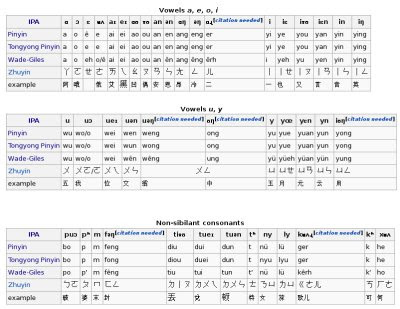
Buying, selling, writing, and talking about Chinese tea in the English language can be rather complicated and confusing, owing to uncertainty about the names of teas. The Chinese language is unfamiliar and alien-sounding to most English speakers, although the base-level of cultural awareness of the Chinese language among the general U.S. population has increased dramatically in recent years. One thing that complicates the naming and spelling of teas is the use of different systems of Romanization. The following screenshot of a chart on Wikipedia shows a few common Romanizations of Chinese:


Romanization is the translating of names from one language into the characters of the Roman alphabet, the alphabet used in English and many other Western languages. There are several different systems of Romanization of Chinese, but the most well-known two of these are Pinyin and Wade-Giles.

Wade-Giles Romanization:

Wade-Giles Romanization is an old system for transcribing Chinese characters that was developed by Sir Thomas Francis Wade, a British Diplomat, during the mid 19th century. Wade-Giles romanization was the dominant form of Romanization in English speaking countries for most of the 20th century, and was used in an overwhelming majority of books published on China until Pinyin began to be adopted.

Because tea culture was firmly established in the West during this period, many of the Wade-Giles spellings of names of tea, such as Pouchong, stuck, either in their literal form or in closely-related spellings. Other spellings, like Lapsang Souchong and Oolong, are artifacts of some other Romanziation system.

Pinyin Romanization:

Pinyin is a more modern system of Romanization, which was developed organically, based on building off earlier systems. Zhou Youguang was a Chinese linguist who figured prominently in the development of Pinyin, although many people were involved in its development. Pinyin was created in the 1950's and initially published in 1958, but the system has been revised since then. Pinyin was created with the official support of the government of the People's Republic of China, and the system retains official backing to this day. There are several variants of Pinyin, including Tongyong Pinyin, adopted briefly by the Republic of China (Taiwan), but the differences are slight.

There are compelling advantages to Pinyin over Wade-Giles and other earlier systems, although there are ways in which it is less intuitive as well. Although Chinese pronunciation does not come close to corresponding cleanly in a one-to-one way with any Western Languages, and is hard to map into Roman characters by any means, Pinyin offers several improvements. Some of the sounds beginning with "chi" in Wade-Giles did not correspond well to the Western "ch" sound, and are represented by "ji" in Pinyin, which is a closer match to how English uses the letter "j". Similarly, Wade-Giles' use of the letter "j" could be particularly unintuitive, and has been replaced with "r" in some cases where it is a much better match. One consonant in Pinyin, however, which I find unintuitive is "c", which makes a "ts" sound that was written as "ts" in the old Wade-Giles system. Pinyin also switches the "d" and "t" relative to Wade-Giles, which leads to much confusion, and Pinyin uses separate "b" and "p", using "p" for the aspirated syllable rather than Wade-Giles which used an apostrophe to mark aspiration.

In the tea world, some of the results of these changes are Tung Ting -> Dong Ding or Pai Mu Tan --> Bai Mu Dan, and returning to the three examples above, Pouchong --> Bao Zhong, Lapsang souchong -> Zhengshan xiaozhong, and Oolong --> Wu long.

Barriers to Adopting Pinyin for Tea Names:

In spite of the fact that Pinyin has been widely adopted as the primary means for romanizing the Chinese language in the West (as well as in China), there remain a number of barriers keeping these names from being adopted in the tea world. One of these is the alien-looking spelling of some tea names. Zhengshan xiaozhong is a good example...even some people such as myself who are at least somewhat familiar with the difference between Pinyin and Wade-giles are unlikely to recognize this name as being the name as "Lapsang Souchong" at a brief glance.

Another barrier, in a very specific case, is that the term "Wulong" or "Wu long" has become associated with the fad (and scam) of weight loss teas. Legitimate tea companies thus are forced into making the choice of using the old Wade-giles spelling Oolong, which is widely used in the tea industry and among tea enthusiasts, or using the Pinyin "Wulong", which strongly evokes (and is associated on the internet with) the weight loss fad.

How do I handle romanization?

I've adopted a fairly complex take on how to handle romanization, both in general and on RateTea, where I've taken some effort to standardize how Chinese tea names are handled. I settled on using the most widely accepted spellings, rather than universally preferring one romanization over the other. But because Pinyin has been replacing Wade-giles on a global level, when the two names are used with roughly similar frequencies, I have given a preference to Pinyin. I also make a prominent reference to the Pinyin spelling at the introduction of each RateTea article on specific styles of Chinese tea, even for teas typically referred to in older Romanizations, and I use Pinyin spellings for all provinces and counties of China.

What do you think?

Do you have any opinions or preferences on the romanizations of Chinese tea names? Can you think of any advantages or disadvantages of either system, or any barriers to the adoption of Pinyin in the tea world, beyond those which I have mentioned here? How do you personally handle these differing spellings and romanizations when you talk about Chinese teas?

Wednesday, November 23, 2011

Blogging Advice: Writing on Other Sites

Today I read a post on Sara's blog Tea Happiness titled Steep Thoughts- The Shamlessly Promoting Stuff Edition, in which Sara writes about the Tea Review Blog. I really like the Tea Review Blog; it is a lot like Teaviews, another site that I really like. In many respects, these two sites, featuring a team of reviewers that post reviews of teas, fill a niche that is intermediate between individualized tea blogging and community sites that are open to the public for free sign-up, like RateTea and Steepster.

I did not think there was anything overly promotional about Sara's post, and this got me thinking about when a blogger goes too far in promoting material posted on another site. I am sensitive to this because I do not want to come across as overly promotional about RateTea or any of the other sites that I run. I have definitely seen blogs that cross this line (including ones I would not overly label as spam), and I came up with the following advice to offer. Feel free to take it with a grain of salt, or offer your own perspective!

I think this issue is important for tea bloggers, however, as many of us publish on a variety of different sites, from microblogging social networking sites, to guest posts on other blogs, to community sites, forums, and the like.

When you publish on other websites:

I have two key guidelines or recommendations to bloggers who wish to promote their writing pieces on other blogs or websites. Whatever you do, make sure your blog retains its character, and share things in context.

Make sure your blog retains its character:

If you mostly write detailed posts with a chatty tone, or if you mostly write elegant, poetic posts with beautiful photography, then keep your posts in this style even when you wish to share your writings on other sites. If I subscribe to a blog, it is often not just because I like the content and subject matter, but because I like the style and presentation.


My blog is often characterized by the inclusion of nature photographs, followed by slightly far-fetched analogies between what is going on in the photo, and the subject of the blog post. Just as this Yellow-bellied sapsucker (a sap-eating woodpecker) is migrating south to warmer regions for the winter, some bloggers find it fruitful to migrate over to posting material on websites other than their blog. However, unlike migratory birds, bloggers usually have the best results if they continue to publish unique posts on their blog throughout the year, even if they do start publishing elsewhere as well.

Sharing things in context:

I tend not to like blog posts that consist of a single link to a writing piece or blog post on an external site. This sort of sharing of links is appropriate for twitter, facebook, Google+, and a variety of other sites. By sharing links like this on a blog, you are losing the main benefit of all-out blogging rather than using these other "microblogging" services.

If someone arrives at your blog post, they're set up to read something...at least a paragraph or two, maybe. If they come to your post, they're ready to absorb information, and more than just a single sentence or link. If you just include a link, you're wasting their attention, losing an opportunity to engage with a captive reader. Furthermore, by making someone follow the link to another site, you can sometimes be wasting your reader's time, especially if you share a post on twitter that takes the reader to a page that just links over to another page. It sounds silly, but people do it more often than you might think.

What does it mean to share something in context?

There are many different ways to share things in context. You can write a blog post about a different topic, and link to one of your articles that expands on a topic you mention tangentially or in passing. You can write a blog post that highlights a collection of articles you've written, with a blurb about each of them. And, if you really do want to write a blog post that serves solely to point the reader to one article on a different site, I would recommend:

  • Share why you think this post would be exceptionally interesting or relevant for your readers to read.

  • Add something unique, like unique or exclusive commentary on the article, such as a personal reflection on why you wrote it.

  • Write the post in the style / character of your blog.

  • Include such posts only sparingly in your blog.


What do you think?

Do you like this advice? Do you follow it yourself? Do you think I have been doing a good job of following my own guidelines, or am I a hypocrite? Any other related advice to offer, to me or anyone?

Sunday, November 6, 2011

Top 5 Most Unpopular Posts That May Be Worth Reading

Back in June, I shared my top 5 most popular (most viewed) posts. Now, I'm sharing my most unpopular posts...not necessarily the posts that people dislike (as these sometimes attract extensive attention, but the ones that have received the least traffic.

However, this list is selective; I have carefully filtered this list for posts that I think are actually worth reading:

  • Adding Citric Acid to Teas - Critical commentary on the practice of adding citric acid to herbal teas and blends, something that certain brands do.

  • Thankful About Tea - Last year's Thanksgiving post.

  • Tea, Weight Loss, and Control Studies - A post in which I explore whether or not it is even possible to use control studies to practically answer the question of whether or not tea aids weight loss.

  • Sage Tea Made Like Black Tea - The outcome of an experiment in which I bruised the leaves of common sage (Salvia officinalis) and allowed them to completely oxidize, emulating the production process of black tea.

  • Antioxidants: Is Bitter Tea Better? - A purely speculative post in which I pose the question of whether or not bitter tea could be healthier than tea that is less bitter.


Enjoy!

Thursday, November 3, 2011

Blog Post Length

Lately I've been writing a lot of posts and really long posts.

Sometimes I start to think that a shorter post format would be more accessible to readers. I don't have a good sense of how people read the posts on this blog, how much of a post they actually read, and how much they think about it.

On the other hand, the post length reflects a certain natural, self-contained progression of an idea that I want the post to encompass, and I don't think it would be easy for me to make my posts much shorter without cutting out essential ideas. And the post frequency reflects the degree to which I feel inspired to write.

What do you think? How much of my posts do you read? Does it vary by the post? Does writing more often make it more or less likely for you to actually read posts?

Tuesday, October 25, 2011

Tea and Politics: Making Politics More Like Tea

This post is inspired by Stephane of Tea Masters, who recently posted Review tea like a liberal and brew like a conservative. This post contains a few subtle but humorous cracks at American politics (and possibly French, although I know nothing about French politics), in the course of giving very solid advice about brewing and selecting teas.


But I want to comment on something else in this post, which is an observation Stephane makes:

Politics and tea don't mix well. At a tea gathering (can't use the word tea party anymore!), it's best not to speak politics, a divisive topic.


I've found this statement to not only be true of the world of tea, but of most aspects of life that are not political. But rather than just accepting the divisiveness as politics, I would like to question it, and provide a proposal of a way to re-create politics as a topic that can be positive and empowering to talk about. And, I'd like to use tea culture as a model or analogy of how to achieve this goal.

Why is the subject of politics "divisive" in conversations?

Most of you have probably observed or participated in a conversation about politics that became heated, argumentative, negative, or confrontational. Maybe you were the one who got fired up or frustrated, or maybe you weren't, and either someone else got confrontational with you, or you just observed two people arguing with each other. Once the conversation becomes heated, people stop listening and start talking past each other, often repeating themselves. People's stress level elevates, little of value gets communicated, and the people in the conversation, as well as bystanders, usually feel that the experience is negative or unpleasant.

The natural reaction of many people is to then avoid the topic of politics, reasoning that politics is inherently divisive. This reaction is especially common among people who, like me, value listening and good communication, and want to create a relaxed, positive atmosphere in which everyone feels comfortable and appreciated. It's also a common reaction among people who value their time and don't want to waste their time with unproductive arguments.

But the negative sort of dynamic described above does not happen accidentally--it has certain clear causes, and by understanding these causes we can become empowered to prevent them, and keep the conversation positive. And, contrary to popular belief, the underlying cause is not the topic of politics. It is how we think about politics.

How we think about politics:

Cognitive psychology has actually made some interesting advances that have the potential to explain the influences of thought patterns and thought processes on mood and emotions. If you want to read more on this topic, I go into more depth on this topic in a post on another blog of mine, A Definition of Extremism: Correctly Identifying and Gracefully Handling Extremist Views.

One interesting pattern that is easily observable in these conversations is that the escalation of conflict usually follows the use of black-and-white statements and overgeneralizations, often in the form of labelling. Some of these statements or ideas are spoken out loud, but many of them are held implicitly, in our heads. "All democrats / liberals believe / do X, Y, and Z." or "All republicans / conservatives believe / do X, Y, and Z." Even the simple act of labelling a person or group as "liberal", "conservative", "socialist", or "libertarian" is usually fallacious and unnecessary--most peoples views are complex and cannot be fully described by these labels. Exaggerating statements are another big culprit.

What can we learn from tea?

Tea is generally not a divisive topic. Why? As with politics, the answer lies not in tea itself, but in how we think about tea.

Most of us acknowledge and embrace the fact that different people have different tastes in tea. Even when we associate with tea drinkers who are most similar to us, we regularly come into contact with people who have vastly different tastes from our own. And we do not think it strange or problematic when our tastes differ...in fact, often, we listen to each other's differences of opinions, and make mental notes of them in case we encounter a tea that we think a friend might enjoy more than we do, or if we're looking to give tea as a gift.

But it's not just the types of thoughts and statements we make in association with tea that differs from the heated political arguments described above, it's also the speed and style with which we think about tea and talk about tea. Tea is often embraced during a time of rest or relaxation, a break. Tea is not a focal point of action, it is a liberation from action. When we think more slowly and say less, we can think more carefully, and we can focus on the quality of our thinking and make sure that our thoughts and words flow into constructive ends rather than just causing an escalating argument.

Can't we do politics like tea?

I believe that we can learn how to do politics more like we do tea. Although there may be some cultural barriers and inertia holding us back, I believe it can be done.

We cannot control others' thoughts, but we can control our own. If we are more aware of our own thought processes, and are especially conscious of our word choice in our speech and writing, we can at least refrain from the sort of incendiary statements, such as the false dichotomies, overgeneralizations, exaggerations, and labels, that tend to upset people. We can listen to people and make it more likely that they feel heard and understood, and we can go out of our way to show respect to people who disagree with us, as well as encouraging others who agree with us to show respect to those with different viewpoints.

One of my attempts to move the culture of politics in this direction is the Cazort.net political platform, which I maintain and have developed with the consultation of countless others with a broad range of political viewpoints. If you are interested in seeing what a political platform might look like without the sort of "liberal vs. conservative" dichotomy that exists in the U.S. and many other countries, I would invite you to visit that site. I am constantly refining and updating the ideas contained there, so if you have any comments, suggestions, or criticisms, I'd be most grateful (the site accepts comments there, so please comment on these points there rather than here).

Think about politics like you think about tea:

But most importantly, just give it some thought, and question the notion that politics is inherently controversial. It's not politics, it's how we think about politics. And maybe if we thought about politics more similarly to how we think about tea, many problems in our society would solve themselves.

Monday, October 17, 2011

What do you bring to tea blogging?

I was recently inspired by a post by Steven Knorr on The 39 Steeps, titled Unqualified but not disqualified. The post is a bit of a personal reflection, but it gets at the issue of qualifications or credentials as a "tea person" or "tea expert". One of my favorite quotes from this post is towards the end:
All I've got is the ability to type 90 wpm, a nose and a mouth, and a lively interest. And the ability to speak English fluently.

I can also relate to what Steven writes about ruts of depression or anxiety, times when I feel powerless. I think in our modern society, nearly everyone feels these things at some point in time, to some degree. When I'm in a bad place, some of the thoughts and worries that I have when I think about the effort I put into RateTea and this blog are ones like: "With so many blogs, websites, media outlets, and messages out there, how can I possibly get anyone's attention?"

This collage of screenshots captures just how many tea bloggers there are:


Those are all member blogs of the Association of Tea Bloggers, of which I am a member. Yet...the collage only shows some of their blogs, not a full list. And there are numerous tea bloggers who are not in this association.

The self-promotion mentality:

It's easy to see what's out there and to get into a mindset that I like to call the "self-promotional mindset". The thought process goes like this..."There are so many blogs out there." --> "Wow, it's so competitive." --> "I need to do a lot of clever marketing or strategizing if I am going to attract significant readership to my blog."

I think this is not necessarily a healthy mindset. At its extreme, it leads towards spammy behavior. I also think it's not based on truth. I think the biggest fallacy in this line of reasoning is the idea that the atmosphere of blogging is "competitive". This is a subjective interpretation of reality, and from my experience, it's not true. Bloggers form a community, and they are more interested in engaging with each other and cooperating than they are with competing against each other.

I also think that at its root, this mentality is based on thinking of blogging as "what can I get out of blogging" rather than "what can I bring to blogging". Yes, you can get things out of blogging...you can generate revenue by serving ads on your blog, or by adding affiliate links to tea companies, and if you own a tea company, you can generate traffic to your website and make money by selling tea. But I still think that this isn't the best or most productive way of thinking about blogging.

Getting out of this mentality: what can I bring to blogging?

In the spirit of the famous JFK Inaugural address, "Ask not what your country can do for you - ask what you can do for your country".

I find it uplifting to focus on the fact that each person brings unique gifts to anything they try. Blogging is no exception. I think that this mentality actually helps people to get the most out of blogging as well...it's a bit ironic, by thinking of giving most, you get the most. But it works like this: the best way to "promote" a blog is to write something unique and interesting, sharing from your own personal experiences, and writing from your own strengths.

What do I bring?

I have no credentials when it comes to tea, just my own limited personal tasting experience, which, relative to many bloggers, is not particularly deep. Visual design is also not my strong suit. Here I am, still using the default blogger theme, and the site that I've put the most effort into, RateTea, was made fun of on the Steepster forums for its visual design (before the recent updates, mind you, and we actually substantially redesigned the RateTea homepage again today, so hopefully it looks even better).

But I do bring something unique.

What I do think I have to offer is an above-average knowledge of ecology, some business experience, some gardening experience from the mid-Atlantic and midwestern U.S., and an academic statistics background that helps me to sort through the piles of research on the science of tea and health, and herbs and health. And I also bring a fairly quirky, zany mind with a knack for drawing deep connections between subjects that most people might not think are related.

And, back to Steven Knorr's 39 Steeps, I will say, I think that tea blog also has something unique to offer. It's eclectic, which makes it interesting to read and helps to inspire creativity. Steven also has discerning tastes, which makes me better able to trust what he writes, and, as diverse as the posts are, he seems selective about what topics he covers...I think a good bit more selective than I am. So, addressed both to Steven and numerous others: stop all the silly talk about not having any credentials! =)

What do you bring?

Think about what you bring to blogging...and consider commenting or writing a follow-up post. I would be curious to read what you personally believe your strengths are as a blogger and a tea enthusiast.

Wednesday, September 21, 2011

There Is No Should

In this post, I want to highlight a particularly nasty word that sneaks into our vocabulary, and that, unfortunately, is deeply embedded in our culture. This is the word should. The essence of the word "should" is one person telling another person what to do. Should says: do it this way, the right way, or else you're doing it wrong. Should passes judgment, but without providing information.


The word should appears all over the place in tea culture:
  • You should brew this tea with water at such-and-such temperature.
  • You should try this tea, because it's so good.
  • You should store your tea this way.
  • You should look for this quality or that when buying tea.
  • You should use this brewing vessel for brewing this type of tea.
  • ...and of course, the infamous: you should not do X, Y, Z, or W.

...and the list goes on. First of all, I want to own up to the fact that I'm guilty of making some of these statements, both in my speech and my writing. My project to eliminate the word should is a work-in-progress, which I will get to below. But that said, I want to explain why I think these recommendations are problematic.

What's wrong with the word should?

Some statements are highly subjective. Take the statement: "You should try this tea, because it's so good." Although in some cases there is loose consensus about the relative quality of teas among certain small groups of people, teas are not universally "good" or "bad"...these are subjective statements. And yes, I have some objective data to back this statement up with a very strong argument.

On RateTea, I have programmed a matching system that allows users to compare their tastes in tea with each other, a lot like the way online dating sites calculate match percentages for compatibility of potential romantic partners. If you have rated enough teas in common with other users, you will be able to utilize this feature by visiting your profile or the profile of other users. What is my highest similarity with another user on RateTea? This would be 67%, with Marlena of Tea for Today, followed by 65% for the user MimiG; the next closest matches are in the 50%'s. 67% means that, if each of us try two teas, we tend to prefer the same tea only 67% of the time. And this is with the user on the site who has the closest match to my tastes.

Tastes are diverse! When you say "you should try/buy/drink this tea", you might be wrong. A safer statement to make would be: "I really love this tea, it is one of my favorites.", or if you really feel that it's likely the person would like it, say: "Based on what I know you like, I think you might really like this tea." -- and then leave the person to make their own decision, without telling them what they should or shouldn't do.

My own personal battle with should:

When the season of lent comes around, I often have tried out giving up various things, inspired by others around me doing the same. Usually, my friends seem to give up foods, and sometimes people give up Facebook, or some other piece of technology. This past lent, I tried giving up the word "should". I was inspired to do so by an observation I made about my own psyche, that I had an internal dialogue that was often based on what I should or shouldn't do, and also based on what other people should or shouldn't do.

When I used the word should on myself, I would often feel guilty when I didn't do things that I had told myself I "should" do. I also found that using the word should on myself did not actually provide any additional motivation for me to do (or not do) certain things.

When I used the word should on others, I would often feel angry or frustrated when other people did not act the way I felt that they "should". I also found that telling people that they "should" do something never motivated anyone do to what I wanted. I often found that the word made other people resistant and closed-off.

Replacing the word should:

Getting rid of the word should proved to be a very difficult task. It took much longer than the season of lent to work on. I enlisted the help of numerous friends and asked them to call me out whenever I used the word. I found that I was using it incessantly, not just in my head, but out loud...especially when I was part of a group that was deciding what to do: "Should we do this, should we do that?" But I quickly developed ways to reword things without using this word, and I found that these other ways of wording things had the benefit of greatly improved specificity, and clarification of what I was trying to communicate:
  • Sometimes we say "should" when we mean "want to". "I should eat now." might mean: "I want to eat now." In a group, asking: "Should we do this?" sometimes can be replaced by the clarifying question: "Do you want to do this?" or the statement: "I would like to do this." But by being more specific about our desires, and asking other people to clarify their own wants and desires, we gain more information and ultimately make it easier for everyone in the group to be happy. And when alone, using the language of "want" rather than "should", we get in touch with our own desires, and help meet our own needs and do what we really want instead of what we feel a vague obligation to do.
  • Sometimes "should" implies something that might go wrong if the direction or instruction is not followed. Often, there is a specific reason for the need, and clarifying it makes the statement more powerful, and a better motivator. Instead of saying: "You should store your tea in airtight containers." you can say: "If you do not store your tea in airtight containers, the aroma can escape and the tea can lose much of its flavor." The second statement provides more information, and is actually more convincing or compelling in terms of motivating people to store their tea in airtight containers. But because the word "should" is not always associated with need, and is sometimes associated with subjective recommendations, it is often ignored when used to give advice...which leads into the next observation.
  • Sometimes the word "should" is totally superfluous, and describes a vague sense of obligation that is an artifact of some belief or thought that really does not apply in our current situation. An example...it's 6:00...you feel like you "should" eat, out of habit, but you're not hungry. Maybe you ate a big, late lunch? Should you eat, if your body is telling you that you're full? Or, back to our earlier examples...you should brew this tea with 180 degree water. Really? I brewed it with boiling water, compared to steeping with 180 degree water, and I like it better with boiling water.

More resources:

If you liked what you read here, there are a number of good resources, blog posts, and articles on the web about the benefits of avoiding the use of the word should. One of my favorites is Tiny Buddha's How to Enjoy the Journey More by Eliminating the Word Should. There's another good post about should on The Unheard Word. I also found another very simple, but interesting take on the subject in a post titled Replace the word SHOULD with COULD (now only available on archive.org). I found all of these to be good resources for getting more perspective on this topic, and they are all relatively quick reads.

How about you?

Do you use the word should? Have you worked on eliminating or reducing your use of this word? Have you seen any positive results from avoiding the use of this word? Do you know of any good writings / online resources on the word should besides those I've found here? Let me know!

Tuesday, August 9, 2011

Under-Appreciated Pages on RateTea

I put a tremendous amount of effort into RateTea, and, while the site has been growing rapidly and getting a large number of pageviews, there are a lot of articles on the site that have gone under-appreciated, perhaps because they are buried deep within the site, or in some cases, just because people don't know about them. This post is my attempt to draw attention to some pages I've written that I think a number of people might find very interesting, but that so far have attracted few views.

While I founded RateTea primarily as an interactive site where people can rate and review teas, I want it to be the most accurate and comprehensive informational tea resource on the web. Over time, I have added a great deal of carefully researched material, mostly written by myself, but a few written by others, and every article revised with help from a number of others, on topics relating to tea and herbal teas, including both the teas, their production, and related health topics. Many of these articles would not be possible without the wealth of information provided by bloggers, tea companies, and scientific researchers' whose work I cite on many of the pages.

I want to highlight a few of these carefully researched articles on the site; this selection covers the articles that I think are more interesting, but unfortunately have been less visible:

  • Organic Tea - This article explores the topic of organic-certified tea from as neutral a perspective as I was able to take. As someone who is strongly committed to sustainability, I find organic agriculture appealing, both in tea and for other food crops. However, as this article explores, organic certification is not without its downsides, and the organic label certainly does not address all the problems it sets out to. This is a good article if you want a more critical take on organic tea, but still coming from someone who thinks organics are a good idea.

  • Rooibos or South African Red Tea - This article covers a lot of different topics relating to rooibos, including both economic and environmental issues with its production as well as some of the fascinating health properties of this herb; there is also a sub-page on green rooibos. Rooibos may be of particular interest to people with asthma or breathing problems; check out the page for more explanation.

  • Antioxidants in Tea - Antioxidants are a topic on which it can be hard to find impartial, science-backed information, mainly because the topic of antioxidants has been so heavily hyped up in the natural health media. Contrary to popular belief, antioxidants are not always good for you. This article explores some of the tougher questions relating to the antioxidants in tea, again attempting to adopt as neutral and science-based a perspective as possible. You may be surprised by some of the studies cited in this article.

  • Pu-erh tea - If you are a serious Pu-erh enthusiast or connoisseur, you will probably not find much on this page. But RateTea appeals to a broad audience, including a large number of people who have never even heard of this tea. If you know only a little bit about Pu-erh and want to learn more about what it is, how and where it is produced, and what is known about its health effects, this page will give you a good overview of the topic.

  • Storing Tea - I find this page and the whole topic of storing tea to be a lot more interesting than I thought I would. It seems rather cut-and-dry, right? Yet there is a surprising amount of controversy on the topic of storing tea, particularly, in terms of how long it can stay fresh if stored properly. This page starts with the basics but dives into much more depth than you might realize.


Please let me know what you think of these pages! And please, if you run a website or blog and think that there are under-appreciated pages on your site, do share them as well in your own blog post. I always want to read what people consider to be their best work or posts on topics they personally find interesting or thought-provoking!

Wednesday, June 22, 2011

Reviewing Teas to Give Useful Feedback to Tea Companies

People review teas for many different reasons; one of the many roles or functions reviews fill in the world is that of giving feedback to tea companies on their products. Whether or not you intend your review to function as feedback, it is feedback. If you publish your reviews online, people within tea companies are able to read your reviews, and whenever a tea company comes across or reads one of your reviews, they will see it through the lens of customer feedback.

Reviews as customer feedback:

From the perspective of a business, reviews can be immensely valuable as feedback on one's product or work. In the realm of tea, this feedback can sometimes be simple, such as "I did not like this tea.", which, if enough customers express it, may guide a company to retire the tea more quickly than if they had to rely solely on sales figures. However, it can also be a sign of offerings being more or less similar. But the problem with this sort of feedback is that tastes are highly subjective, and most tea companies already put a great deal of effort into sampling, tasting, and selecting their teas before offering them. So, in a sense, this sort of feedback is not particularly useful. A tea company likely to put out enough effort to respond to customer feedback is probably already doing a pretty good job of selecting good teas to begin with. But there are other things to be learned from customer reviews.

To draw an analogy, I occasionally receive feedback on RateTea of the form: "I love/hate the site." or "I find the site easy / difficult to navigate." or "I think the design looks good / bad or professional / unprofessional." This type of feedback is never particularly useful, because it is not specific enough for me to know how to act on it. There is no "why", and there are so many possible confounding factors (maybe the person just loves or hates the color green, maybe their opinion is skewed by being in an unusually good or bad mood). And, as a webmaster, I have access to detailed statistics showing me how much people are visiting the site, how many pages they view, how likely they are to return, who is sharing or linking to which pages, etc. Simple positive or negative feedback, for all practical purposes, is almost useless. Similarly, when writing a tea review, simply saying that you love a tea does not necessarily provide much useful feedback to a tea company. The company may benefit if, over time, lots of people love a tea (or can't stand it), but the company already has access to this information because they can tell how much of a given tea people are ordering.

More specific feedback is more useful:

For example, with tea: "I felt that X tea was almost indistinguishable from Y, which was lower in price." or "X tea is similarly priced to Y, and the name and description makes them sound similar, but I found them to be quite different, and I enjoy both." or "I can definitely notice the hints of cocoa in the aroma." or "I liked this tea, but I did not detect the malty aroma and I found it more smooth and delicate than robust." So, reviews can also provide more nuanced feedback to a company, than just a coarse "good vs. bad" rating...they can communicate information about value, how similar or different a tea is from the company's other offerings, and perhaps, how a tea compares to a tea in a similar style, offered by a different company.

This can help guide business decisions, such as finding a niche, diversifying one's offerings, writing catalog descriptions of teas, and guiding the selection of teas with different price points.

To those involved in the tea business:

What types of feedback are most or least useful to you? If you could give some advice to tea bloggers and others publishing tea reviews online, advice that would benefit your business in terms of getting useful feedback, what advice would you give?